

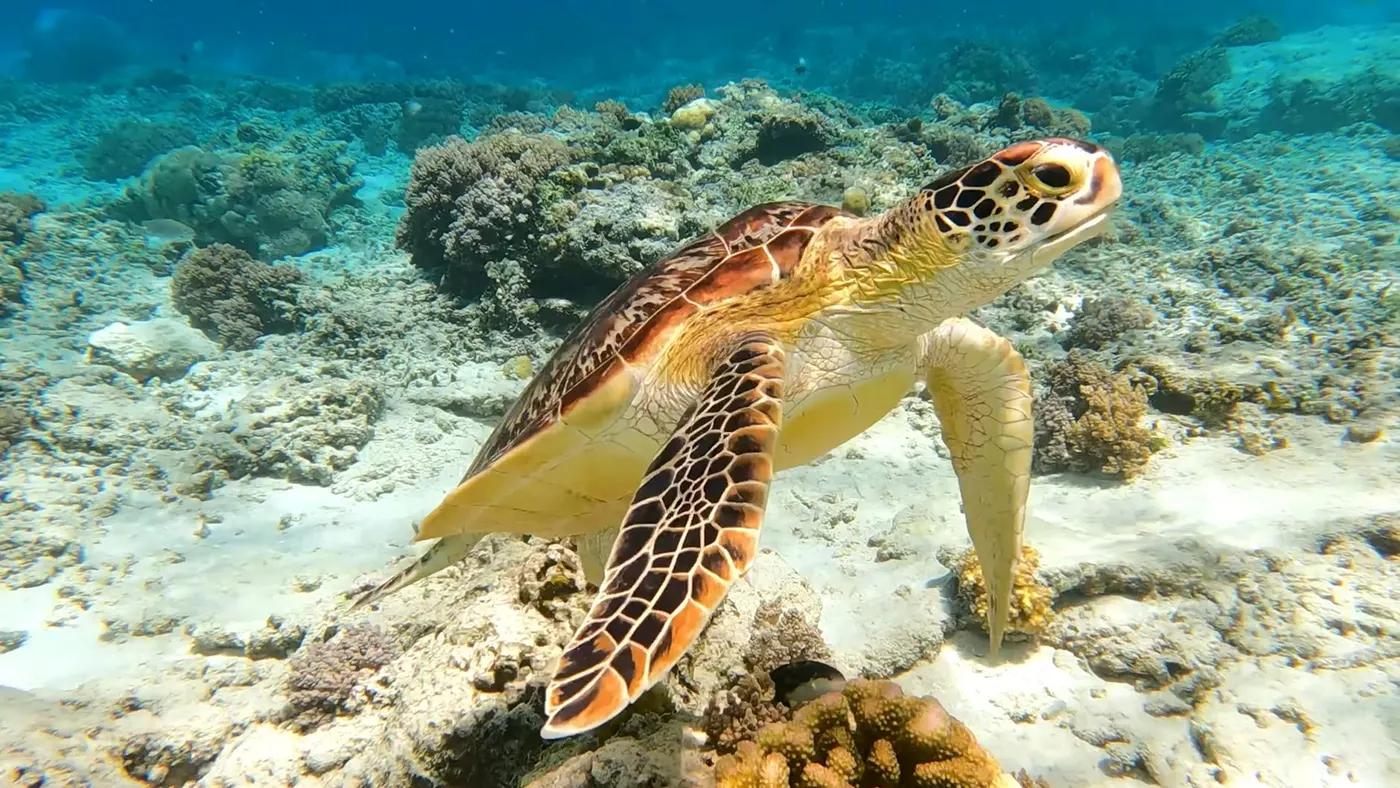
Heron Island Reef and Turtle Nesting
Also known as: Heron Island GBR
Step-off-the-beach reef with nesting and hatching green and loggerhead turtles
The encounter
Species / spectacle: Green turtle (~98% of nesters) and loggerhead nesting and hatching; ~4,000+ resident turtles on the reef year-round; extensive fringing reef; major seabird colonies (up to ~200,000 incl. black noddy tern and wedge-tailed shearwater); reef sharks (epaulette, blacktip); winter mantas; migrating humpbacks.
How you see it: snorkel/dive
Typical duration: Multi-night (commonly 2-5+); turtle viewing ~1-2 hrs evening; guided reef walk ~1-1.5 hrs (Confirm.)
When to go
Turtle nesting Nov-Mar, hatching Jan-Apr; reef year-round (May-Oct best clarity); seabird breeding Oct-Apr; mantas Jun-Sep; whales Jun-Oct
Nesting begins Nov, peaks with hatchlings Jan-Feb (high turtle reliability), ends Mar; last hatchlings Apr-May; peak ~200k seabirds Dec-Jan; mantas and humpbacks Jun-Sep.
Best time of day: Night for nesting turtles (around high tide, evening into night); hatchlings best at sunset or sunrise; shore snorkel within 2 hrs of high tide.
Nesting (Nov-Mar) vs hatching (Jan-Apr) windows; seabird breeding peak Dec-Jan; coral mass spawning ~Nov full moon; humpback migration Jun-Oct (jetty whale-watching); manta season Jun-Sep.
Sightings are seasonal probabilities, not promises - even in peak season nature does its own thing.
Who it suits
Difficulty (1-5): 2 (Light-to-moderate (turtle viewing light; reef walk/dive moderate, tide-dependent))
Physical demand: Turtle viewing is low-effort night walking on soft sand (stand still and quiet); reef walks cross uneven slippery reef flat (reef shoes advised); shore snorkel easy within 2 hrs of high tide; diving needs current tolerance.
Accessibility & group fit: Well suited to families - safe shore snorkelling, guided walks and nature programs; boat or helicopter transfer required (no road access); soft sand and reef flat may challenge limited mobility (Confirm.).
Options for a mixed group: Split across evening turtle walk vs shore/boat snorkel vs guided reef walk vs scuba dive vs bird/nature walk - parallel activities let non-divers and families choose lower-intensity options.
Permits & responsible travel
Regulation / permits / fees: National park (Capricornia Cays NP; QPWS ranger station) within the GBR Marine Park. Strict turtle-watching rules enforced. GBRMPA EMC ~AUD 7.50 pp/day usually bundled (Confirm.). No general-tourist camping on Heron (resort only); drone use restricted.
Guide / crew: No guide legally required for beach viewing (follow the code); resort Naturalist Guides run a daily Turtle Awareness talk and complimentary guided walks; dive activities need certified staff.
No lights or flash near the beaches; if a turtle is ashore remain low and still, stay 10 m away and behind her line of sight; avoid the dune/vegetation (nests below the sand); never handle hatchlings or dig them out - let them crawl unaided; turn off room/balcony lights and close curtains at night; attend the daily Turtle Awareness talk.
Permits, fees and quotas change - confirm before booking.
Safety & hazards
Night beach walking on soft sand (do not disturb nests/dunes); slippery reef flat and tides; sun/heat; occasional mild stingers; mutton birds very noisy at night in breeding season; drone restrictions.
Weather / conditions: Hot humid summers with wet-season storms; occasional mild/nuisance stingers in warmer months; winter water ~18 C (wetsuit); wind/sea state affects the ~2 hr crossing; tide dictates reef access.
Remote coral cay ~70-72 km offshore; nearest mainland hospital Gladstone; no mobile reception (resort/station comms); evacuation by boat or helicopter weather-dependent; no flying within 24 hrs of diving.
Getting there & staying
Access logistics: Reach Gladstone, then the Heron Islander launch (~2 hr each way; ~09:30 departure; daily except Tue/Thu - Confirm.) or helicopter (~30 min; ~AUD 470-710 one-way - Confirm.). Island ~70-72 km off Gladstone; helicopter luggage ~15 kg.
Accommodation / camping: Heron Island Resort (rate includes guided activities and snorkel hire) or UQ Heron Island Research Station; no public camping on Heron (park camping only on North West, Mast Head, Lady Musgrave).
Gear / water / connectivity: Snorkel gear hire complimentary for resort guests; wetsuit recommended in winter; reef shoes for reef walks; no mobile coverage, paid WiFi in some public areas.
Facilities: Resort restaurant, bar, shop, pool, Marine Centre/dive shop, jetty and Naturalist Guide program; UQ research station; QPWS ranger station.
Crowds / solitude: Low-density and quieter than large GBR hubs; visitor numbers capped by resort/station capacity; beaches feel solitary at night though viewing spots may draw small groups in peak season.
Operators & guiding
Nearby operators / hubs: Gateway hub Gladstone (marina, airport); Heron Islander ferry; Marine/Heron Island Helicopters; neighbouring Wilson Island resort; UQ research station.
Guided trips / outfitters: Heron Island Resort in-house Naturalist Guide program and PADI dive team; third-party multi-day turtle-season packages (MED); UQ field programs.
Operators change - confirm current licensing before you book.
Live conditions & sources
Recent sightings and today's conditions are a runtime layer - check the sources: Heron Island Resort turtles: https://www.heronisland.com/eco-adventure/turtles ; Queensland Parks Capricornia Cays: https://parks.qld.gov.au/parks/capricornia-cays
This profile is desk research, compiled from public sources - not a first-hand wildlife report. Coordinates are approximate.