

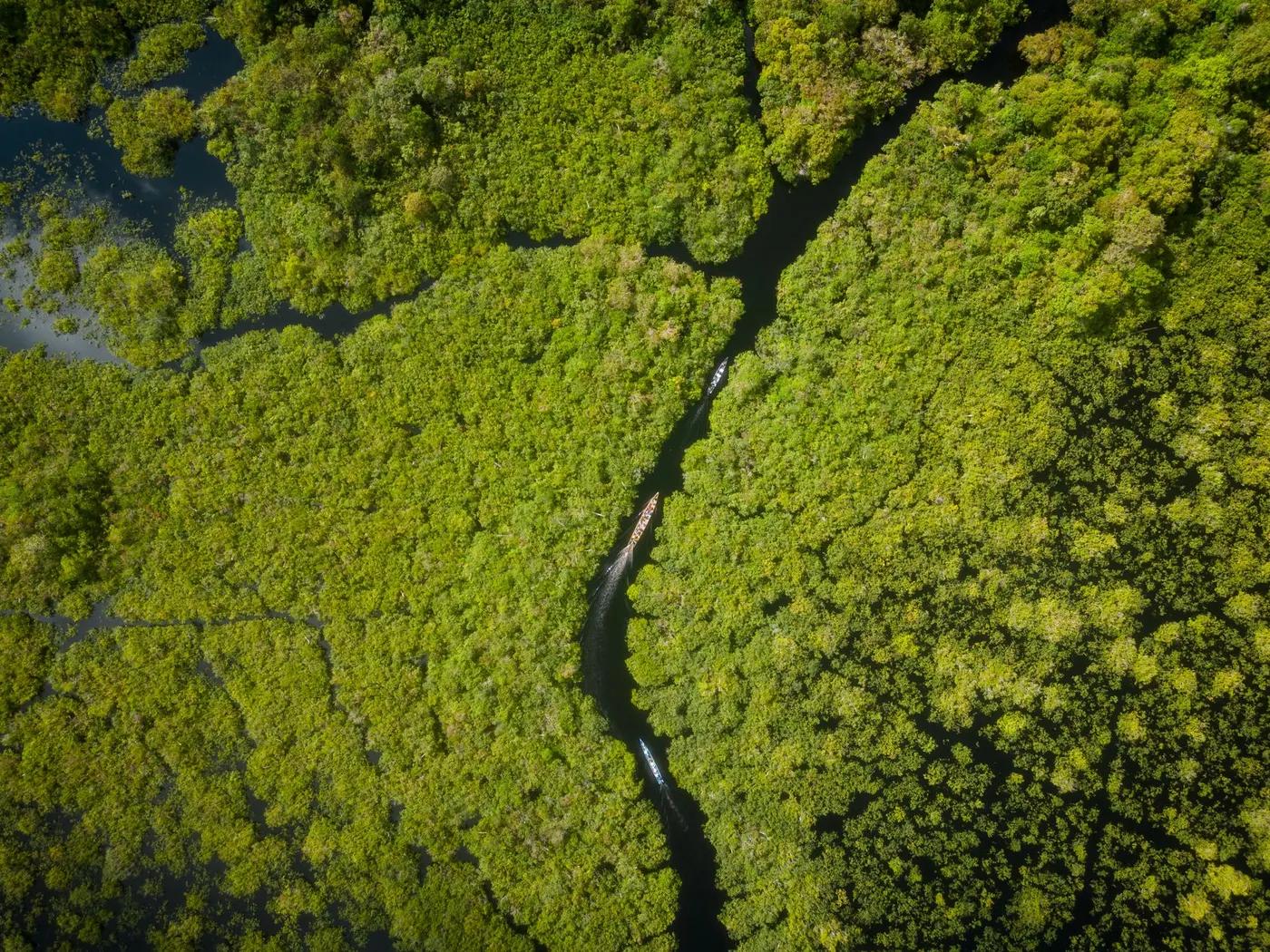
Cardamom Mountains Wildlife
Also known as: Cardamom Rainforest
Vast wilderness with gibbons, hornbills and community ecotourism
The encounter
Species / spectacle: Pileated gibbons (mostly heard calling), plus hornbills, macaques and rich birdlife; wider Cardamoms hold elephants, sun bears and other threatened wildlife.
How you see it: trek/boat/night walk
Typical duration: Half-day to multi-day treks; one to three day forest-and-camp itineraries are common.
When to go
Dry season roughly Nov-Apr for firmer trails and river access; wet season brings mud, leeches and swollen rivers.
Gibbon calls reliably heard year round at dawn; visual sightings less certain and vary (Confirm.).
Best time of day: Dawn treks give best chance of gibbon calls and cooler walking.
Dry-season kayaking and clearer forest access; higher green-season waterfalls and birdlife.
Sightings are seasonal probabilities, not promises - even in peak season nature does its own thing.
Who it suits
Difficulty (1-5): 3 (moderate)
Physical demand: Hilly jungle trekking on rough trails, river crossings and humid heat; multi-day options demand reasonable fitness and stamina.
Accessibility & group fit: Best for active travellers; itineraries scale from easy village walks to demanding overnight treks. Not suited to limited mobility.
Options for a mixed group: CBET assigns local guides per small group, so parties are split by fitness and chosen route.
Permits & responsible travel
Regulation / permits / fees: Fees paid through the Chi Phat CBET office fund guides, community and conservation; mandatory local guide.
Guide / crew: Compulsory CBET-registered local guides and porters/cooks for overnight trips.
Book directly through the CBET to support former hunters turned guides; follow no-litter and no-wildlife-purchase rules and keep distance from animals.
Permits, fees and quotas change - confirm before booking.
Safety & hazards
Rough terrain, heat, leeches, snakes and river crossings; go with the community guides and carry first aid. Wild sightings not guaranteed.
Weather / conditions: Heavy wet-season rain, slippery trails, leeches and river flooding; year-round heat and humidity.
Basic; remote area with slow evacuation to Koh Kong or Sihanoukville hospitals.
Getting there & staying
Access logistics: Travel to Andoung Tuek on the Koh Kong-Sre Ambel road, then community boat or road transfer up the Preak Piphot river to Chi Phat village.
Accommodation / camping: CBET homestays and guesthouses in Chi Phat; hammock and tent camping with rangers on multi-day forest treks.
Gear / water / connectivity: Bring boots, leech socks, water and rain gear; connectivity limited in the village and absent in the forest.
Facilities: CBET visitor centre, homestays and simple eateries in Chi Phat; basic forest camps.
Crowds / solitude: Generally quiet and low-volume, offering strong solitude in the forest.
Operators & guiding
Nearby operators / hubs: Chi Phat CBET, Wildlife Alliance, Koh Kong and Chi Phat guesthouses.
Guided trips / outfitters: Chi Phat CBET office is the main outfitter; some Cambodian eco-operators package trips.
Operators change - confirm current licensing before you book.
Live conditions & sources
Recent sightings and today's conditions are a runtime layer - check the sources: https://www.wildlifealliance.org/eco-tourism-chi-phat/ ; http://chi-phat.org/
This profile is desk research, compiled from public sources - not a first-hand wildlife report. Coordinates are approximate.