

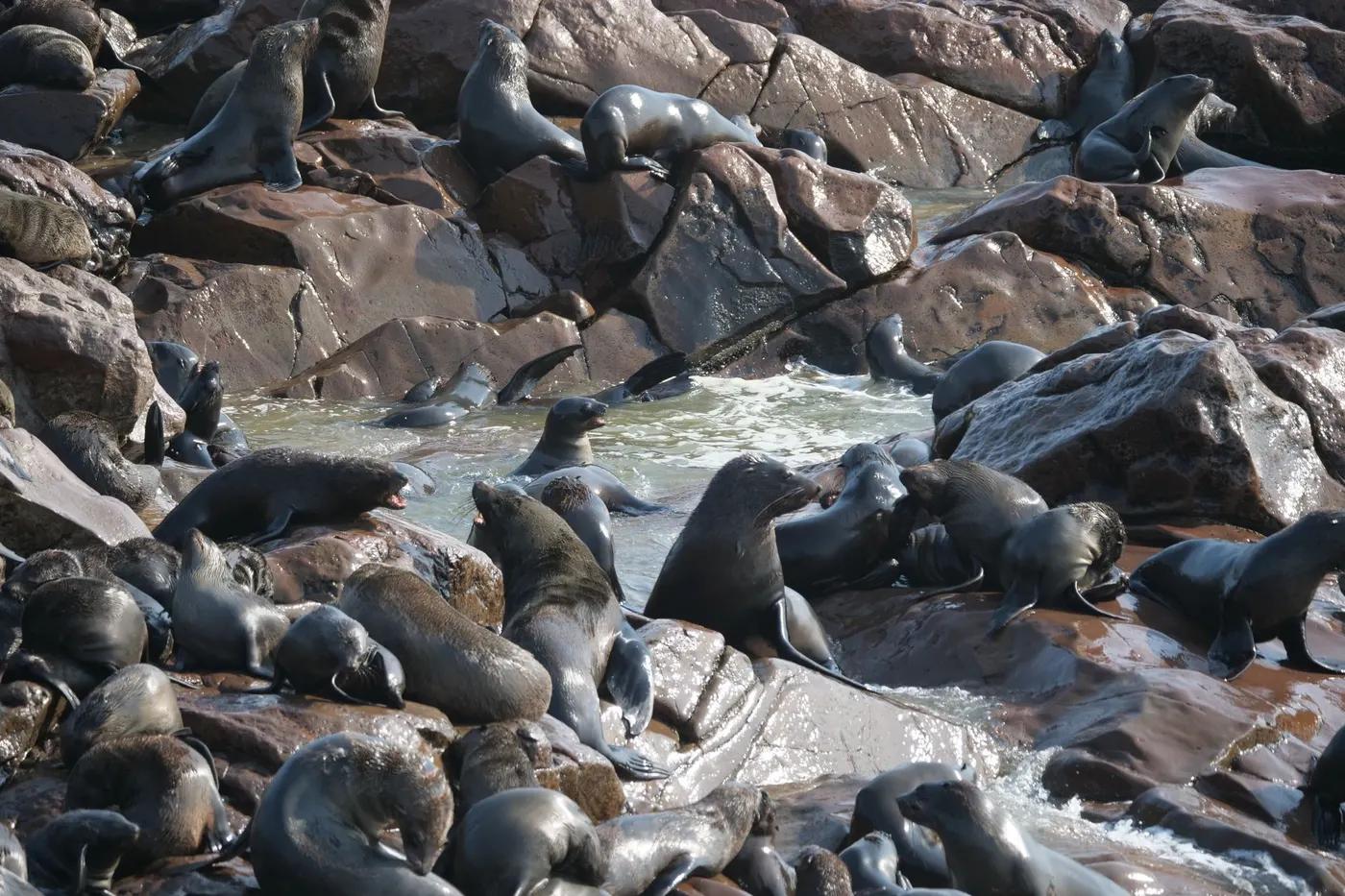
Abel Tasman Tonga Island Seals
Also known as: Tonga Island Marine Reserve
Paddle a marine reserve past the park's largest fur seal colony
The encounter
Species / spectacle: New Zealand fur seals or kekeno breeding around Tonga Island, plus occasional dolphins, little penguins and coastal shags.
How you see it: snorkel
Typical duration: Full-day guided paddle around seven to eight hours covering fifteen to twenty km of coast; half-day options also available. (Confirm.)
When to go
Main paddling season roughly October to April; seals present around the reserve year-round and common in winter migration.
Seals reliably present around Tonga Island through most months, notably in winter, though hauled-out numbers vary and are not guaranteed. (Confirm.)
Best time of day: Mornings are usually calmer with lighter wind; afternoon sea breezes commonly build.
Seal breeding around October to January brings pups; winter northward migration boosts seal numbers.
Sightings are seasonal probabilities, not promises - even in peak season nature does its own thing.
Who it suits
Difficulty (1-5): 2 (moderate)
Physical demand: Several hours of paddling with upper-body and core effort; full-day trips mean long periods seated in a kayak.
Accessibility & group fit: Needs reasonable fitness; tandem kayaks suit mixed pairs; not ideal for those uncomfortable in small craft. (Confirm.)
Options for a mixed group: Small guided groups with an escorting guide, or freedom kayak hire for independent paddlers.
Permits & responsible travel
Regulation / permits / fees: Tonga Island Marine Reserve is a DOC no-take reserve; keep at least 20 m from seals; only three operators are licensed to view marine mammals by kayak. No reserve entry fee.
Guide / crew: Guided tours carry licensed guides; freedom hire is self-guided after a safety briefing.
Maintain the 20 m distance, never touch or feed seals, respect the breeding colony and observe marine-reserve no-take rules.
Permits, fees and quotas change - confirm before booking.
Safety & hazards
Fast-moving seals can bite so keep 20 m; cold water, capsize risk, sun exposure and tides.
Weather / conditions: Wind, sea swell and tidal currents; trips are weather dependent and may be rescheduled.
Operators carry VHF radios; nearest town services at Motueka and Nelson.
Getting there & staying
Access logistics: Depart Marahau or Kaiteriteri; many trips water-taxi to a drop-off such as Onetahuti, then paddle south through the reserve.
Accommodation / camping: Marahau, Kaiteriteri and Motueka bases; DOC campsites and huts along the coast.
Gear / water / connectivity: Kayaks and spray gear provided; bring water and sun protection; mobile coverage is patchy in the park.
Facilities: Operator bases at Marahau; limited facilities within the park and DOC toilets at campsites.
Crowds / solitude: Popular park that can be busy in summer, though the reserve is quieter than the southern beaches.
Operators & guiding
Nearby operators / hubs: Abel Tasman Kayaks, Marahau Sea Kayaks, R and R Kayaks and Abel Tasman Aqua Taxi; hubs Marahau and Kaiteriteri.
Guided trips / outfitters: Abel Tasman Kayaks Remote Marine Reserve tour and full-day Magical Marine Reserve paddles.
Operators change - confirm current licensing before you book.
Live conditions & sources
Recent sightings and today's conditions are a runtime layer - check the sources: DOC, Abel Tasman Kayaks and Nelson Tasman tourism. https://www.doc.govt.nz/parks-and-recreation/places-to-go/nelson-tasman/places/tonga-island-marine-reserve/ ; https://www.abeltasmankayaks.co.nz/guided-kayak-tours/remote-marine-reserve/
This profile is desk research, compiled from public sources - not a first-hand wildlife report. Coordinates are approximate.