

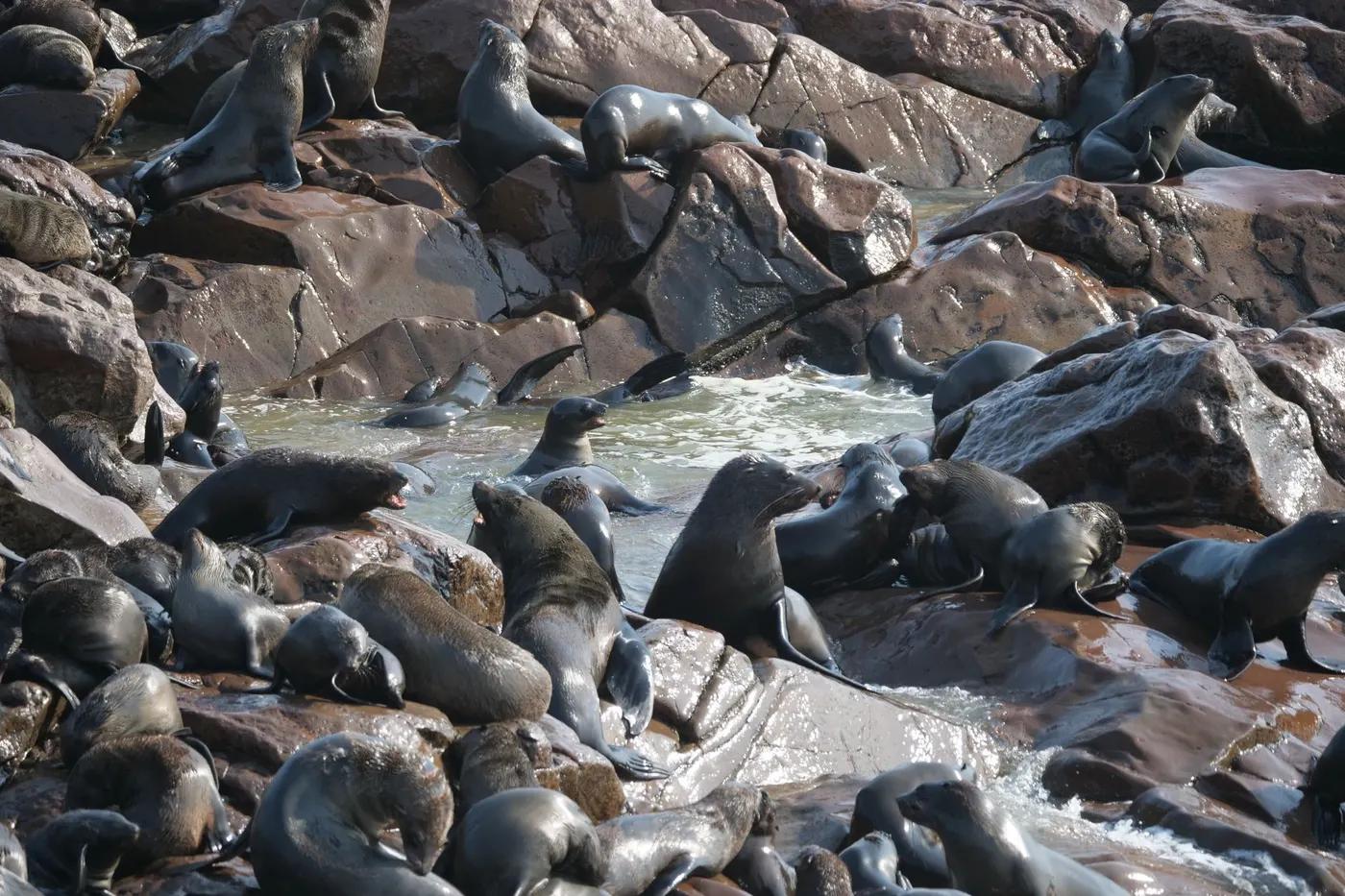
Cape Palliser Fur Seal Colony
Also known as: North Island's Largest Seal Colony
The North Island's largest breeding colony of New Zealand fur seals
The encounter
Species / spectacle: New Zealand fur seals hauled out and breeding, with pups present around November to January; dramatic rugged coastline and lighthouse.
How you see it: drive
Typical duration: One to two hours for seal viewing and the lighthouse steps.
When to go
Year-round for seals; pupping season around November to January adds pups. Summer offers the best road conditions.
Seals present year-round as a permanent colony; pups most visible November to January (Confirm.).
Best time of day: Daylight hours; softer light early and late. Colony active throughout the day.
Pupping season with young seals late spring to summer.
Sightings are seasonal probabilities, not promises - even in peak season nature does its own thing.
Who it suits
Difficulty (1-5): 2 (light)
Physical demand: Seal viewing is roadside and easy, but the lighthouse involves roughly 250 steps with a ten-to-fifteen-minute climb. Uneven rocky ground near seals.
Accessibility & group fit: Seal colony viewable from near the road with minimal walking; the lighthouse steps are not accessible. Suits families, solo visitors and groups.
Options for a mixed group: Self-guided site; groups can spread along the coast road and viewing areas freely.
Permits & responsible travel
Regulation / permits / fees: Free to visit with no booking; lighthouse steps, seal viewing and parking are open access. Stay well back from seals as legally protected marine mammals.
Guide / crew: No guide required; self-guided. Lodge-based guided tours available in the area (Confirm.).
Keep at least the required distance from fur seals and never block their path to the sea. Do not disturb pups or approach for photos.
Permits, fees and quotas change - confirm before booking.
Safety & hazards
Aggressive or startled seals, slippery rocks, steep lighthouse steps and an isolated road with little signal. Watch for seals hidden among rocks.
Weather / conditions: Very exposed to Cook Strait wind, swell and spray; roads can be affected by weather. Bring wind and rain protection.
Remote location with slow emergency response and poor phone coverage; self-sufficiency essential. Dial 111 where coverage allows.
Getting there & staying
Access logistics: About fifty kilometres from Wellington by air but roughly a two-to-three-hour drive via the Wairarapa and the coast road past Ngawi. The final stretch is a narrow, remote coastal road.
Accommodation / camping: Limited local options around Ngawi and Lake Ferry; wider accommodation in Martinborough and the Wairarapa (Confirm.).
Gear / water / connectivity: Bring water, fuel, food and warm layers - services are minimal at the cape. Mobile coverage is patchy to absent in the area.
Facilities: Minimal facilities at the cape; nearest services at Ngawi and Lake Ferry. No shop or reliable toilets at the colony (Confirm.).
Crowds / solitude: Generally quiet and remote with more visitors in summer and weekends. Solitude likely outside peak times.
Operators & guiding
Nearby operators / hubs: Ngawi fishing village and Wairarapa hubs such as Martinborough; Wharekauhau Lodge offers guided tours (Confirm.). Self-drive is standard.
Guided trips / outfitters: Mostly self-drive; some Wairarapa lodge and private tours (Confirm.).
Operators change - confirm current licensing before you book.
Live conditions & sources
Recent sightings and today's conditions are a runtime layer - check the sources: https://www.newzealand.com/int/feature/cape-palliser/ ; https://wairarapanz.com/products/cape-palliser
This profile is desk research, compiled from public sources - not a first-hand wildlife report. Coordinates are approximate.