

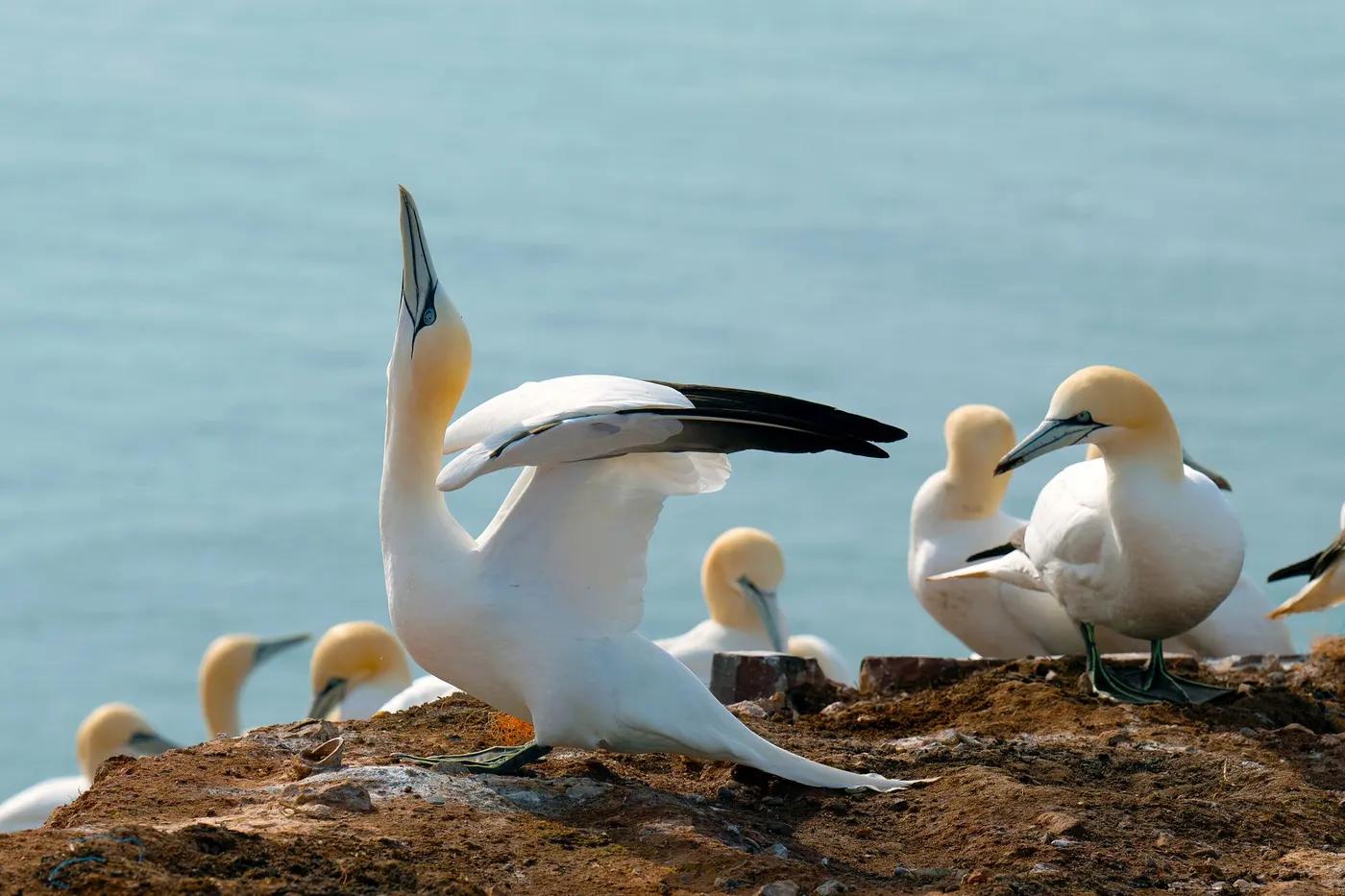
Muriwai Gannet Colony
Also known as: Otakamiro Point Gannets
Thousands of Australasian gannets nest on sea stacks viewed from platforms
The encounter
Species / spectacle: Australasian gannets (takapu) nesting in dense numbers, plus courtship, diving and fledging; white-fronted terns and coastal seabirds also present.
How you see it: trek
Typical duration: Around one to two hours including the short walk and viewing time.
When to go
Roughly August to March when the colony is active; peak activity in mid-summer.
Very high presence August to March; chicks and diving most visible around December to January; near-empty outside the season (Confirm.).
Best time of day: Early morning to avoid crowds and for softer light; active throughout the day in season.
Spring courtship displays, summer chicks and diving adults, and late-season fledging.
Sightings are seasonal probabilities, not promises - even in peak season nature does its own thing.
Who it suits
Difficulty (1-5): 1 (light)
Physical demand: Short formed track and boardwalk from the car park to the platforms with some steps and gentle climbs. Suitable for most visitors.
Accessibility & group fit: Platforms reached by a short, largely easy walk from parking with toilets nearby; some steps limit full wheelchair access. Good for families, solo visitors and groups.
Options for a mixed group: Self-guided viewing means groups of any size can spread across the platforms and lookouts freely.
Permits & responsible travel
Regulation / permits / fees: Free to visit within Muriwai Regional Park, managed by Auckland Council; no permit needed. Stay on platforms and tracks.
Guide / crew: No guide required; self-guided with interpretive signage.
Do not disturb nesting birds, keep dogs away from the colony and stay behind barriers. Take all rubbish away.
Permits, fees and quotas change - confirm before booking.
Safety & hazards
Steep cliffs, strong winds and slippery surfaces near unfenced edges. Track sections can close for maintenance (Confirm.).
Weather / conditions: Very exposed, windswept clifftop with strong sun and gusts; paths slippery when wet. Bring wind and rain protection.
Road-accessible with Auckland emergency services reachable; exposed cliffs demand caution. Dial 111 for emergencies.
Getting there & staying
Access logistics: About an hour's drive from central Auckland to Muriwai Beach; free parking including a Waitea Road car park a short walk from the platforms.
Accommodation / camping: Muriwai Regional Park campground and holiday options nearby; wider accommodation in Auckland (Confirm.).
Gear / water / connectivity: Bring water, sun protection and a windproof layer; no shops at the point though Muriwai village is close. Mobile coverage generally available.
Facilities: Public toilets and parking near the track; cafe and shops in Muriwai village. Interpretive signs at the platforms.
Crowds / solitude: Popular and can be busy in summer and on weekends; quieter early morning and off-season. Parking fills in peak months.
Operators & guiding
Nearby operators / hubs: Auckland hub; Muriwai village services and west-coast tour operators. Often combined with west-coast day tours.
Guided trips / outfitters: Not required; some Auckland west-coast tours include a Muriwai stop (Confirm.).
Operators change - confirm current licensing before you book.
Live conditions & sources
Recent sightings and today's conditions are a runtime layer - check the sources: https://www.newzealand.com/us/feature/muriwai-gannet-colony/ ; https://www.aucklandcouncil.govt.nz/en/parks-recreation/find-park-beach/park-detail/220.html
This profile is desk research, compiled from public sources - not a first-hand wildlife report. Coordinates are approximate.