

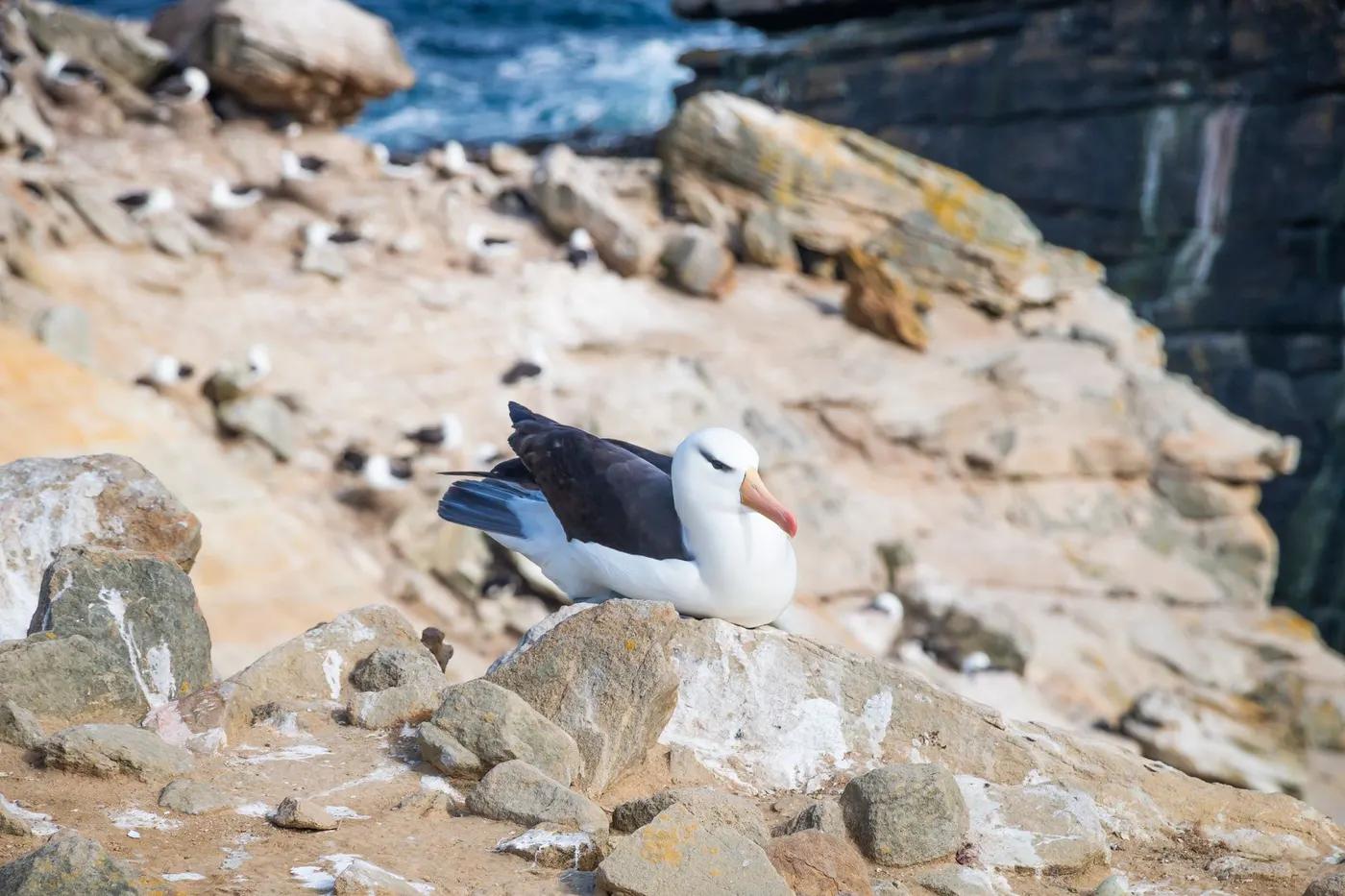
Otago Peninsula Royal Albatross Colony
Also known as: Taiaroa Head, Pukekura
The only mainland breeding colony of northern royal albatross
The encounter
Species / spectacle: Northern Royal Albatross (toroa) nesting and soaring; also red-billed gulls, shags and Otago shag on the headland. Little penguins may be seen offshore at dusk.
How you see it: hide
Typical duration: Classic albatross tour is about 60 minutes; the combined Unique Taiaroa Tour with Fort Taiaroa runs about 90 minutes.
When to go
Birds are present year-round with different breeding stages across the year. Chicks and fledging activity peak in the warmer months (Confirm.).
High in most months as the colony is active year-round, though flying activity is wind-dependent. Low-wind days can reduce soaring sightings (Confirm.).
Best time of day: Windier and later parts of the day often give better soaring flights; centre opens mid-morning with tours through to evening in summer.
Egg-laying, hatching, chick-guard and fledging stages differ through the year; a live nest cam supplements viewing when birds are distant.
Sightings are seasonal probabilities, not promises - even in peak season nature does its own thing.
Who it suits
Difficulty (1-5): 1 (light)
Physical demand: Short guided walk of a few hundred metres up a sealed path to the glassed observatory, with some steps. Suitable for most general visitors.
Accessibility & group fit: Centre and observatory are largely accessible; some gradient and steps on the walk (Confirm.). Good for families, older visitors and mixed-ability groups.
Options for a mixed group: Tours run in scheduled timed groups; larger parties can be split across departures. Private tours cater to small groups.
Permits & responsible travel
Regulation / permits / fees: Access to nesting area only via Otago Peninsula Trust guided tour; ticketed. Classic tour roughly mid-three-figure NZD for adults with child and family rates (Confirm.).
Guide / crew: Guided tour mandatory to enter the nesting reserve; independent viewing of nests is not permitted.
Viewing is from an enclosed observatory to avoid disturbing nesting birds; a portion of ticket revenue funds albatross protection. Follow guide instructions and keep quiet.
Permits, fees and quotas change - confirm before booking.
Safety & hazards
Exposed cliffs, strong wind and cold; stay on paths. This is an active military-history and wildlife reserve with restricted areas.
Weather / conditions: Exposed coastal headland with strong wind, rain and cold; wind actually aids albatross flight but chills visitors. Dress warmly and windproof.
Staffed visitor centre; nearest hospital in Dunedin. Standard NZ emergency number 111.
Getting there & staying
Access logistics: About a 30-40 minute drive from Dunedin along the Otago Peninsula to Taiaroa Head; car park on site. Some coach and wildlife tours include it (Confirm.).
Accommodation / camping: No camping at the reserve; accommodation in Dunedin and along the peninsula at Portobello and Harington Point. Book ahead in peak season.
Gear / water / connectivity: Warm windproof layers essential; binoculars useful. Cafe and facilities at the centre; mobile coverage generally present (Confirm.).
Facilities: Visitor centre with cafe, shop, toilets and interpretive displays; historic Fort Taiaroa and Armstrong Disappearing Gun on site.
Crowds / solitude: Popular ticketed attraction with scheduled tour groups; can be busy in summer. Not a solitude experience.
Operators & guiding
Nearby operators / hubs: Hub Dunedin; nearby Monarch Wildlife Cruises, The OPERA (formerly Penguin Place), Otago Peninsula wildlife tour operators.
Guided trips / outfitters: Royal Albatross Centre / Otago Peninsula Trust (albatross.org.nz); combo packages with Monarch cruise and The OPERA available.
Operators change - confirm current licensing before you book.
Live conditions & sources
Recent sightings and today's conditions are a runtime layer - check the sources: Otago Peninsula Trust / Royal Albatross Centre official site; newzealand.com. https://albatross.org.nz/tours/
This profile is desk research, compiled from public sources - not a first-hand wildlife report. Coordinates are approximate.