

Jellyfish Lake
Also known as: Ongeim'l Tketau, OTM
Snorkel among millions of golden jellyfish in a landlocked marine lake; fragile, no sunscreen, no diving
The encounter
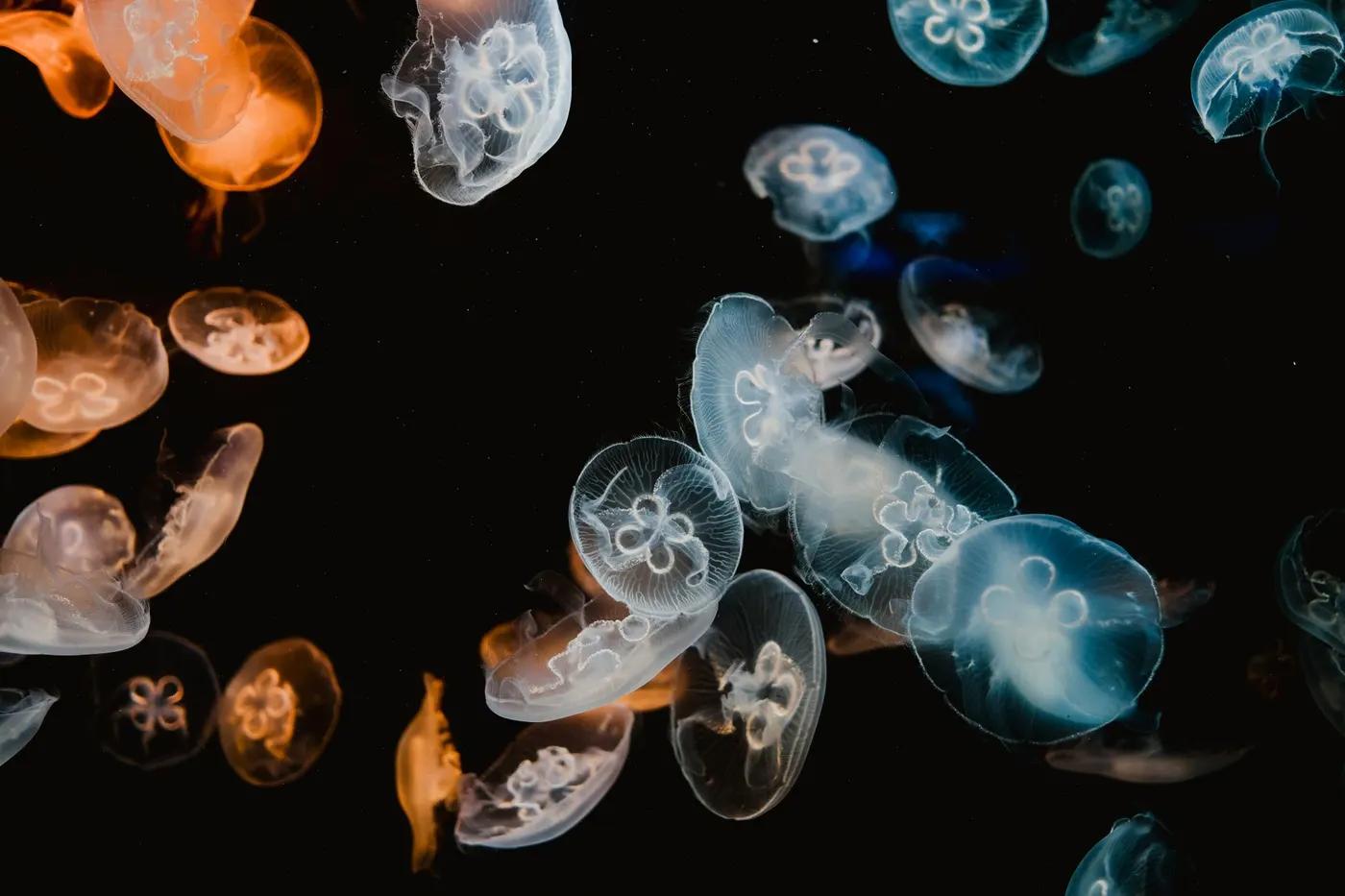
Species / spectacle: Golden jellyfish (Mastigias) that migrate across the lake daily following the sun, plus moon jellyfish. The near-stingless swarm is the headline spectacle.
How you see it: snorkel
Typical duration: Roughly 30-45 min in the lake, part of a full-day Rock Islands boat tour from Koror (Confirm.).
When to go
Year-round; drier calmer months roughly Nov-Apr give the smoothest boat transfers (Confirm.).
Jellyfish present year-round with seasonal population swings; densities fell sharply after a drought and recovered before reopening (Confirm.).
Best time of day: Late morning to midday when jellyfish rise and concentrate in sunlit water (Confirm.).
Jellyfish numbers fluctuate with rainfall and El Nino cycles; blooms are densest in wetter high-salinity-balanced periods (Confirm.).
Sightings are seasonal probabilities, not promises - even in peak season nature does its own thing.
Who it suits
Difficulty (1-5): 1 (light)
Physical demand: Short steep muddy trail with ropes and boardwalk steps over a ridge to reach the lake. Easy flat-water snorkel once in; life vests required and no fins to protect the jellyfish (Confirm.).
Accessibility & group fit: Suits families and non-divers aged six and up; basic swimming and snorkel comfort needed. The trail may challenge those with mobility limits.
Options for a mixed group: Tour boats typically carry small mixed groups; larger parties can split between the lake swim and nearby snorkel stops (Confirm.).
Permits & responsible travel
Regulation / permits / fees: Requires Koror State Rock Islands permit that includes Jellyfish Lake; combined fee cited around USD 100 per person valid ~10 days versus ~USD 50 Rock Islands only (Confirm.). Snorkel only, no scuba.
Guide / crew: Access is via licensed Koror State tour operators; guides brief on the trail, safety and no-touch rules.
Do not touch or lift jellyfish; no fins; reef-safe sunscreen only under Palau law banning oxybenzone and octinoxate, with fines and confiscation for banned products (Confirm.). Rinse off chemical sunscreen before entering.
Permits, fees and quotas change - confirm before booking.
Safety & hazards
Slippery trail, deep anoxic hydrogen-sulfide layer below the swim zone that must not be disturbed, mild jellyfish contact possible for sensitive skin. Lake has closed to visitors before during population crashes.
Weather / conditions: Slippery trail after rain; boat transfer exposed to lagoon chop on windy days. Lake water is calm and warm.
Remote lagoon site; rely on operator first aid and boat evacuation to Koror. No on-site medical facilities.
Getting there & staying
Access logistics: Speedboat from Koror to Eil Malk, roughly 45 min, then the ridge trail to the lake (Confirm.).
Accommodation / camping: No lodging at the lake; visitors stay in Koror hotels and day-trip. Rock Islands camping is permit-controlled elsewhere.
Gear / water / connectivity: Mask, snorkel and provided life vest; bring water and sun protection. No mobile connectivity at the lake.
Facilities: Basic dock, boardwalk and trail infrastructure; limited or no toilets at the lake itself (Confirm.).
Crowds / solitude: Can be busy at midday when multiple tour boats converge; early or off-peak visits are quieter.
Operators & guiding
Nearby operators / hubs: Koror is the hub; numerous licensed Rock Islands operators run day tours including the lake.
Guided trips / outfitters: Palau Dive Adventures, Sam's Tours and Fish n Fins among Koror-based operators offering Rock Islands and lake trips (Confirm.).
Operators change - confirm current licensing before you book.
Live conditions & sources
Recent sightings and today's conditions are a runtime layer - check the sources: Koror State Government Rock Islands materials; Oceanic Society; operator guides. https://www.kororstategov.com/ ; https://www.oceanicsociety.org/travel-ideas/palau-jellyfish-lake-awaits-your-visit/
This profile is desk research, compiled from public sources - not a first-hand wildlife report. Coordinates are approximate.