

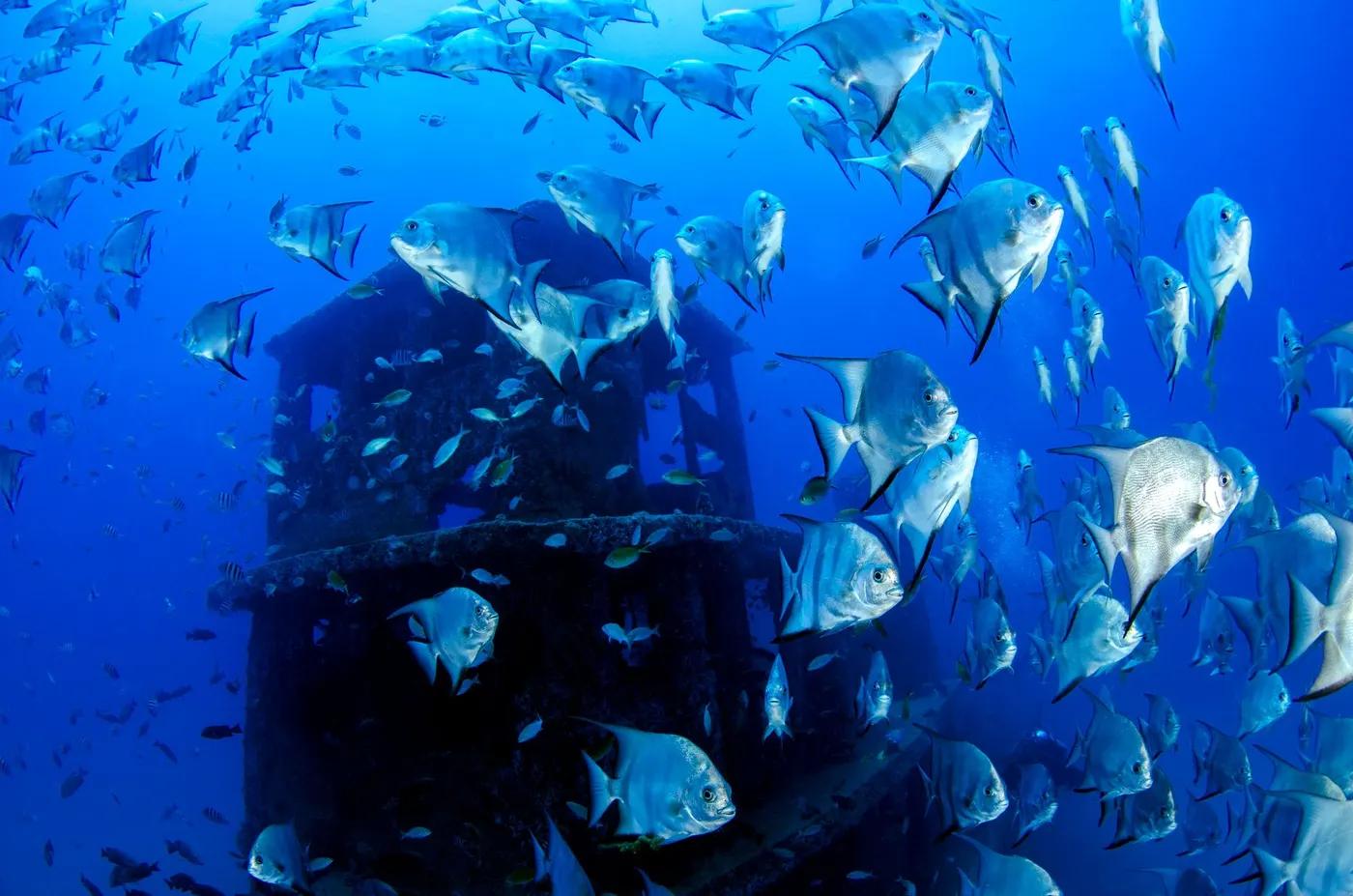
Coron Marine Wildlife
Also known as: Calamianes Reefs and Lakes
Turtles, reef fish and dugong sightings amid lakes and WWII wrecks
The encounter
Species / spectacle: Coral-encrusted wrecks with groupers, barracuda, lionfish, trevally, reef sharks, and green turtles; dugong in northern seagrass meadows.
How you see it: dive/snorkel
Typical duration: Day boat trips of several hours; multi-day dive packages common. Dugong dives are a dedicated day-trip.
When to go
Dry season November to May brings calm seas and best visibility; dugong sightings favour January to May.
Wrecks and reef life reliable year-round; dugong roughly a fifty-fifty chance and best in the dry months.
Best time of day: Morning dives for calmer seas and better light; dugong trips start early.
Peak visibility and dugong activity in the dry season January to May.
Sightings are seasonal probabilities, not promises - even in peak season nature does its own thing.
Who it suits
Difficulty (1-5): 3 - reef and shallow-wreck dives moderate; deeper wrecks and dugong drift dives more demanding. (moderate)
Physical demand: Boat dives with some current; deeper wreck penetration needs advanced skills. Dugong sites involve a long boat ride and shallow drift.
Accessibility & group fit: Snorkellers and beginner divers suit reefs and shallow wrecks; experienced divers for deep wrecks. Non-divers can snorkel dugong grounds (Confirm.).
Options for a mixed group: Operators split by certification and dive site via multiple bangkas or dinghies.
Permits & responsible travel
Regulation / permits / fees: Local government and marine-park user fees apply at some sites (Confirm.); dugong watching follows a strict code of conduct. Protected species must not be touched or chased.
Guide / crew: Licensed dive guides required for wrecks; trained dugong-watch guides enforce distance rules.
Keep distance from dugong and turtles, no touching or feeding, and control buoyancy near wrecks and coral. Support accredited dugong-watching operators.
Permits, fees and quotas change - confirm before booking.
Safety & hazards
Wreck penetration, currents, and depth risks; boat-traffic and weather. Dive insurance advised.
Weather / conditions: Wet-season winds and reduced visibility; currents on wrecks. Long crossings to dugong grounds weather-dependent.
Coron town has hospitals and a decompression chamber may require transfer (Confirm.); operators carry oxygen. Remote sites slow evacuation.
Getting there & staying
Access logistics: Boats depart Coron town; dugong grounds need road transfer to north Busuanga plus about an hour by boat.
Accommodation / camping: Wide lodging range in Coron town and resorts across Busuanga.
Gear / water / connectivity: Dive gear and nitrox via operators. Connectivity good in Coron town, patchy offshore.
Facilities: Dive shops, clinics, and services in Coron town; limited facilities at remote dugong sites.
Crowds / solitude: Popular wrecks can be busy; dugong grounds quieter but access-limited.
Operators & guiding
Nearby operators / hubs: Coron town hosts many dive centers including dedicated dugong-watching operators.
Guided trips / outfitters: Numerous Coron dive shops run wreck, reef, and dugong trips.
Operators change - confirm current licensing before you book.
Live conditions & sources
Recent sightings and today's conditions are a runtime layer - check the sources: https://www.padi.com/diving-in/philippines/busuanga-coron/ ; https://dugongdivecenter.com/
This profile is desk research, compiled from public sources - not a first-hand wildlife report. Coordinates are approximate.