

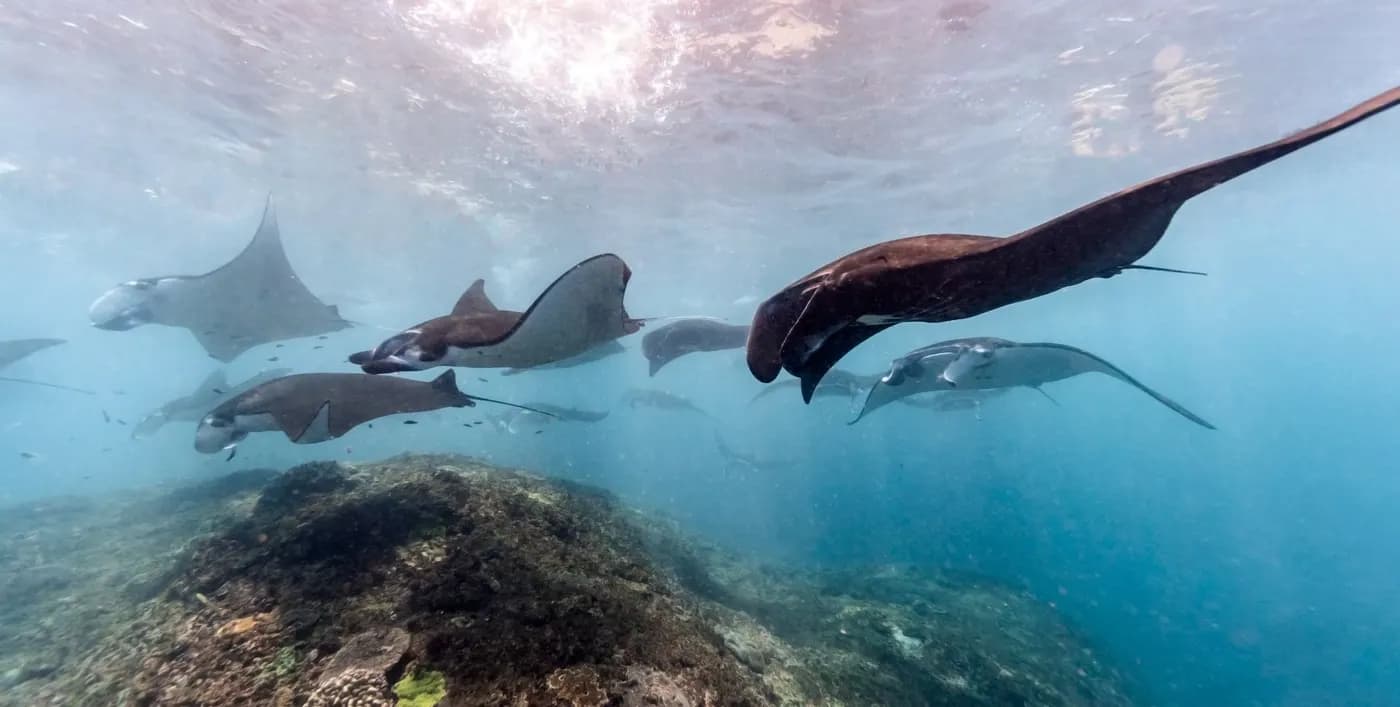
Ticao Manta Bowl
Also known as: Bontod-Tacdogan Reef
Current-swept seamount hosting the largest known reef manta aggregation in the Philippines
The encounter
Species / spectacle: Wild reef manta rays (Mobula alfredi) at cleaning stations; also whale sharks, thresher and whitetip reef sharks, devil rays and occasional hammerheads seasonally.
How you see it: dive
Typical duration: Single boat dive of approx 40-60 min bottom time; usually run as day boat dives or over a multi-day dive stay.
When to go
Dry season roughly Nov-May for best conditions and manta activity.
Higher Nov-May during the dry season at cleaning stations; lower/less accessible Jun-Oct with rougher seas. Wild - sightings not guaranteed and current-dependent.
Best time of day: Timed to slack or favourable tidal current windows rather than a fixed hour; operators plan dives around currents.
Dry-season manta aggregations at the cleaning stations; possible whale shark and thresher/devil ray encounters in the pass.
Sightings are seasonal probabilities, not promises - even in peak season nature does its own thing.
Who it suits
Difficulty (1-5): 4 (high)
Physical demand: Scuba dive with often strong currents, blue-water descents and reef-hook use at approx 14-23 m. Advanced Open Water or equivalent current-diving experience recommended; not for beginners.
Accessibility & group fit: For certified divers with current experience; not suitable for non-divers, families with young children or those with mobility limits. Small dive groups.
Options for a mixed group: Divers split into small buddy groups per divemaster and dive boat; capacity set by operator boat and DM ratios.
Permits & responsible travel
Regulation / permits / fees: Within the Ticao-Burias Pass Protected Seascape; local/marine protected-area and dive fees apply (approx PHP 1,700 per dive at resort rates - Confirm.). Manta interaction rules - no touching, chasing or riding; maintain distance.
Guide / crew: Mandatory local divemaster/guide and dive boat crew; briefing on current and hook use required. Certification checks apply.
Wild cleaning-station site - do not touch, chase or block mantas or hover over cleaning stations; stay low and let mantas approach. Reef-safe practices and buoyancy control essential to protect the seamount.
Permits, fees and quotas change - confirm before booking.
Safety & hazards
Strong currents, down-currents and blue-water disorientation, boat traffic and remoteness; DCS risk offshore. Reef-hook skills and good gas planning needed.
Weather / conditions: Strong and variable currents, surface chop, wind and reduced visibility; dives cancelled in rough seas. Remote offshore site.
Operator O2/first aid and boat crew; nearest recompression chamber and hospital are distant (mainland Bicol/Manila) - dive conservatively. Remote, limited rescue.
Getting there & staying
Access logistics: Reach via Bulan, Sorsogon by ferry to San Jacinto (approx 1 hr) or by boat transfer from Donsol (approx 2 hrs); Ticao Island Resort receives most guests by Donsol boat.
Accommodation / camping: Ticao Island Resort/Dive Camp on Ticao Island is the main base; simpler lodgings in San Jacinto. Multi-day dive stays typical.
Gear / water / connectivity: Full scuba gear and reef hook via the dive operator; bring certification and logbook. Connectivity limited on the island and at sea.
Facilities: Dive resort with compressor, boats, dining and rooms; limited town facilities in San Jacinto. Few services offshore.
Crowds / solitude: Low-traffic, remote site with few operators; often only resort dive groups present. Solitude-friendly but weather-dependent access.
Operators & guiding
Nearby operators / hubs: Ticao Island Resort & Dive Center is the on-island operator; hubs are San Jacinto/Bulan (Masbate/Sorsogon) and Donsol. LAMAVE conducts manta research here.
Guided trips / outfitters: Ticao Island Resort & Dive Center; some Donsol-based and liveaboard operators run Manta Bowl trips.
Operators change - confirm current licensing before you book.
Live conditions & sources
Recent sightings and today's conditions are a runtime layer - check the sources: LAMAVE (manta research org) - https://www.lamave.org ; site/access - https://islandhoppinginthephilippines.com/visayas/faq/diving-ticao-pass-masbate/
This profile is desk research, compiled from public sources - not a first-hand wildlife report. Coordinates are approximate.