

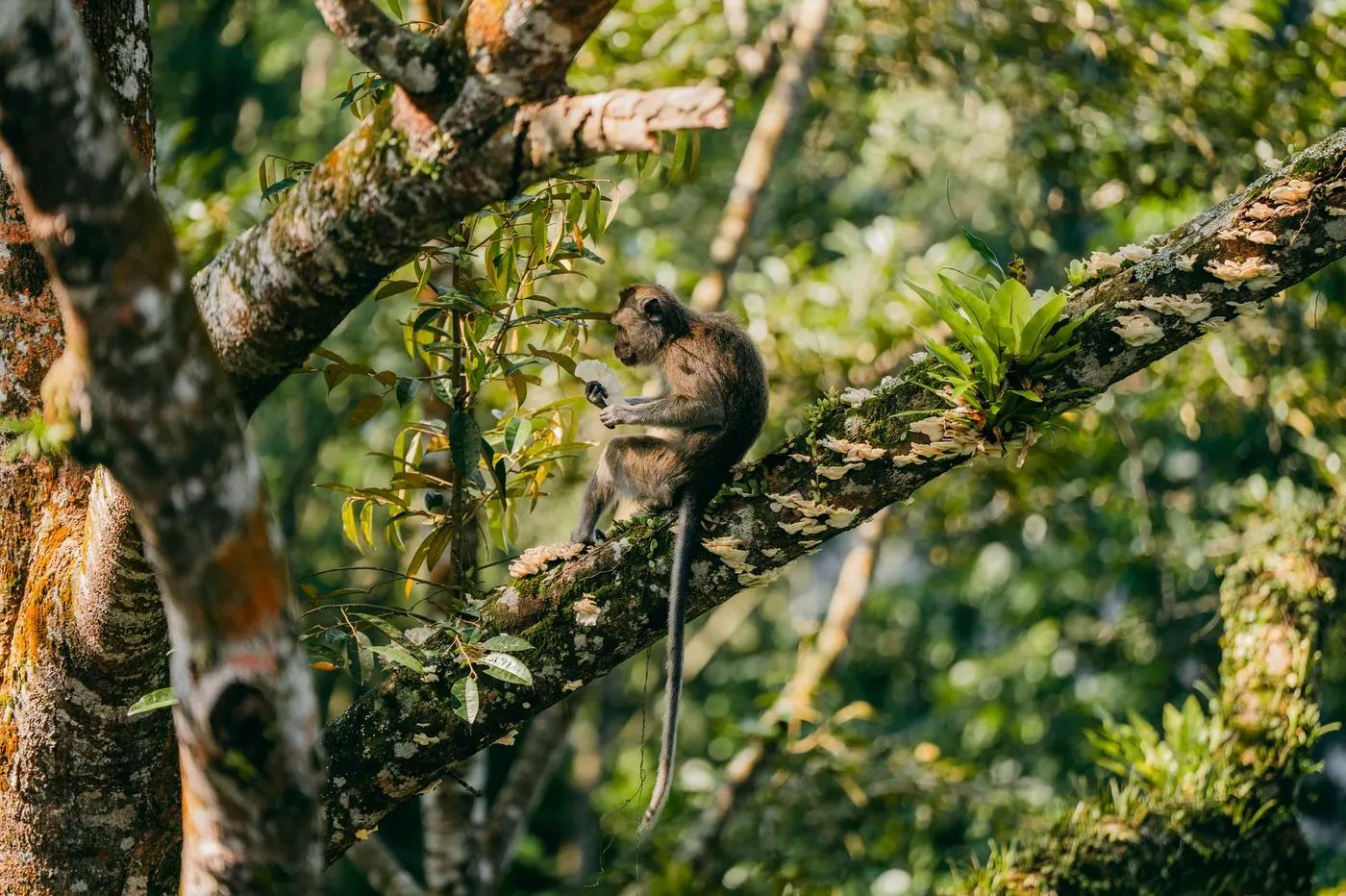
Cat Tien - Dao Tien Primates
Also known as: Dao Tien Endangered Primate Centre
Lowland rainforest with wild gibbons plus an island primate rescue-and-release centre
The encounter
Species / spectacle: Wild golden-cheeked gibbons (dawn chorus) in the forest. Dao Tien holds rescued golden-cheeked gibbons, black-shanked doucs, silvered langurs and pygmy lorises in a semi-wild rescue setting.
How you see it: boat/trek/night walk
Typical duration: The wild gibbon trek is a pre-dawn outing of a few hours. Many packages add an afternoon Dao Tien tour and run over two to three days.
When to go
The drier months are generally more comfortable for trekking and river access. Gibbon calls occur year round at dawn (Confirm.).
Dawn gibbon calls are fairly reliable year round, though visual sightings vary with weather and canopy (Confirm.). Wet-season trails are harder.
Best time of day: Pre-dawn for the wild gibbon chorus, with the trek starting very early. Afternoon is typical for the Dao Tien rescue-island tour.
The dawn chorus is the highlight in any season. Dao Tien occasionally aligns visits with release-linked education about rehabilitated primates.
Sightings are seasonal probabilities, not promises - even in peak season nature does its own thing.
Who it suits
Difficulty (1-5): 3 (moderate)
Physical demand: Very early start, a river crossing and walking on forest trails that can be muddy. Distances are modest but the dawn timing and terrain add effort.
Accessibility & group fit: Best for reasonably fit adults comfortable with early rising and uneven trails. The Dao Tien island visit is gentler and suits a wider range of visitors.
Options for a mixed group: Wild gibbon treks run in small groups, often capped around four people per guide. Dao Tien tours are led in modest guided groups.
Permits & responsible travel
Regulation / permits / fees: Park entry fee plus the boat crossing of the Dong Nai River, with a separate wild gibbon trek fee. Dao Tien visits are arranged through the park and centre; exact amounts (Confirm.).
Guide / crew: Mandatory. Park guides lead the wild gibbon trek and centre staff lead Dao Tien tours.
Keep quiet and distant from wild gibbons; do not feed or touch animals. Dao Tien is a rescue and release centre, so viewing is managed to avoid habituation.
Permits, fees and quotas change - confirm before booking.
Safety & hazards
Leeches, biting insects, slippery trails and heat. River crossings depend on boat operation and weather.
Weather / conditions: Wet-season rain brings mud, leeches and swollen river conditions. Heat and humidity are constant (Confirm.).
Park staff provide first response; serious cases require road transfer to town hospitals. Remote forest sections slow evacuation (Confirm.).
Getting there & staying
Access logistics: Reach Cat Tien by road from Ho Chi Minh City or Dalat to the park gate, then cross the Dong Nai River by boat to the headquarters. Dao Tien is a further short boat hop.
Accommodation / camping: Park bungalows and guesthouses near headquarters, plus lodges in Nam Cat Tien village outside the gate. Booking ahead is advised for early treks.
Gear / water / connectivity: Bring trail shoes, leech socks, insect repellent, water and a rain layer. Connectivity is patchy inside the forest.
Facilities: Headquarters has restaurant, toilets and visitor services; village outside the gate has shops and cafes. Dao Tien itself is a working rescue island with limited facilities.
Crowds / solitude: Small-group trek caps keep wild gibbon outings quiet. The park overall can be busier at weekends and holidays.
Operators & guiding
Nearby operators / hubs: Cat Tien National Park and Dao Tien Endangered Primate Species Centre; Nam Cat Tien village lodges and Ho Chi Minh City tour agencies. Cat Tien NP is the hub.
Guided trips / outfitters: Cat Tien National Park wild gibbon trek and Dao Tien tour, plus operators such as Get Up and Go Vietnam and other HCMC agencies.
Operators change - confirm current licensing before you book.
Live conditions & sources
Recent sightings and today's conditions are a runtime layer - check the sources: Endangered Asian Species Trust (Go-East) and Cat Tien National Park. https://www.go-east.org/visit-us/
This profile is desk research, compiled from public sources - not a first-hand wildlife report. Coordinates are approximate.