

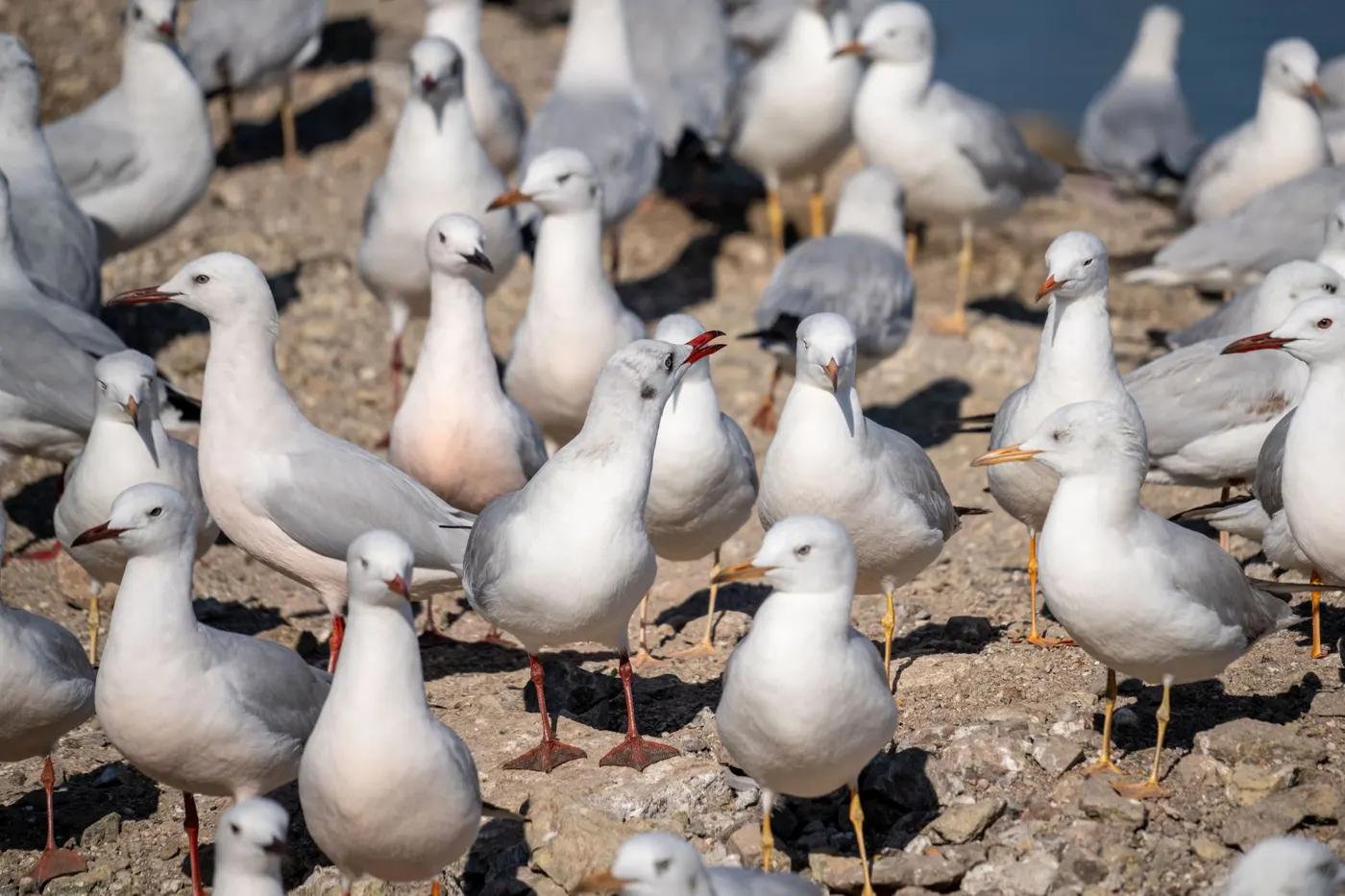
Prek Toal Bird Sanctuary
Also known as: Tonle Sap bird sanctuary
Southeast Asia's premier breeding colony for pelicans, storks and adjutants
The encounter
Species / spectacle: Globally threatened nesting waterbirds - spot-billed pelican, painted stork, milky stork, greater and lesser adjutant, darters and ibis in the flooded forest.
How you see it: boat
Typical duration: Full-day trip from Siem Reap including long drive, lake crossing and small-boat colony viewing.
When to go
Dry season roughly Dec-May when receding water concentrates nesting birds; peak numbers deeper into the dry months.
High Dec-Mar; access to best areas gets harder after Feb as water drops, and colony thins by end of dry season (Confirm.).
Best time of day: Very early morning departures give best bird activity, light and cooler temperatures.
Breeding-colony spectacle with chicks; milky stork and greater adjutant arrive later and linger toward season end.
Sightings are seasonal probabilities, not promises - even in peak season nature does its own thing.
Who it suits
Difficulty (1-5): 2 (light)
Physical demand: Mostly seated boating with long hours; some clambering between larger and smaller canoe-type boats and climbing an observation tower.
Accessibility & group fit: Suitable for keen birders and families comfortable with long boat days; not adapted for wheelchairs or limited mobility.
Options for a mixed group: Visitors transfer into small locally owned canoes at the research station, naturally splitting large groups.
Permits & responsible travel
Regulation / permits / fees: Ministry of Environment core-area conservation fee plus boat hire paid per trip; rangers accompany visitors (Confirm.).
Guide / crew: Assigned park ranger and local boat crew required to enter the core reserve.
Use WCS-trained rangers and Osmose community trips, keep distance from nests, avoid disturbing colonies and support local livelihoods.
Permits, fees and quotas change - confirm before booking.
Safety & hazards
Sun, heat and dehydration; open-water boating with variable levels. Wild-colony viewing means numbers vary with season and water.
Weather / conditions: Intense sun and heat on open lake; low late-dry-season water can strand boats; wet season floods disperse birds.
Limited; nearest full services in Siem Reap. Remote lake environment with slow evacuation.
Getting there & staying
Access logistics: Drive from Siem Reap to Chong Khneas or Phnom Krom dock, boat across Tonle Sap to Prek Toal Environmental Research Station, then small boats into the sanctuary.
Accommodation / camping: Most visit as a day trip from Siem Reap; simple homestays and the Prek Toal floating village offer overnight options.
Gear / water / connectivity: Bring binoculars, sun protection, water and a telephoto lens; connectivity poor once on the lake.
Facilities: Research station with interpretive information and observation tower; minimal facilities in the core zone.
Crowds / solitude: Low to moderate; a niche birding destination far quieter than Angkor.
Operators & guiding
Nearby operators / hubs: Osmose, Siem Reap birding operators, Sam Veasna-style conservation guides, WCS-linked community boats.
Guided trips / outfitters: Siem Reap eco-tour operators and Osmose run guided colony trips; advance booking advised.
Operators change - confirm current licensing before you book.
Live conditions & sources
Recent sightings and today's conditions are a runtime layer - check the sources: https://whc.unesco.org/en/tentativelists/ ; https://www.birdguideasso.org/tour/prek-toal-bird-sanctuary/
This profile is desk research, compiled from public sources - not a first-hand wildlife report. Coordinates are approximate.