

Bako National Park
Also known as: Bako NP
Coastal park with Sarawak's most reliable wild proboscis monkey sightings
The encounter
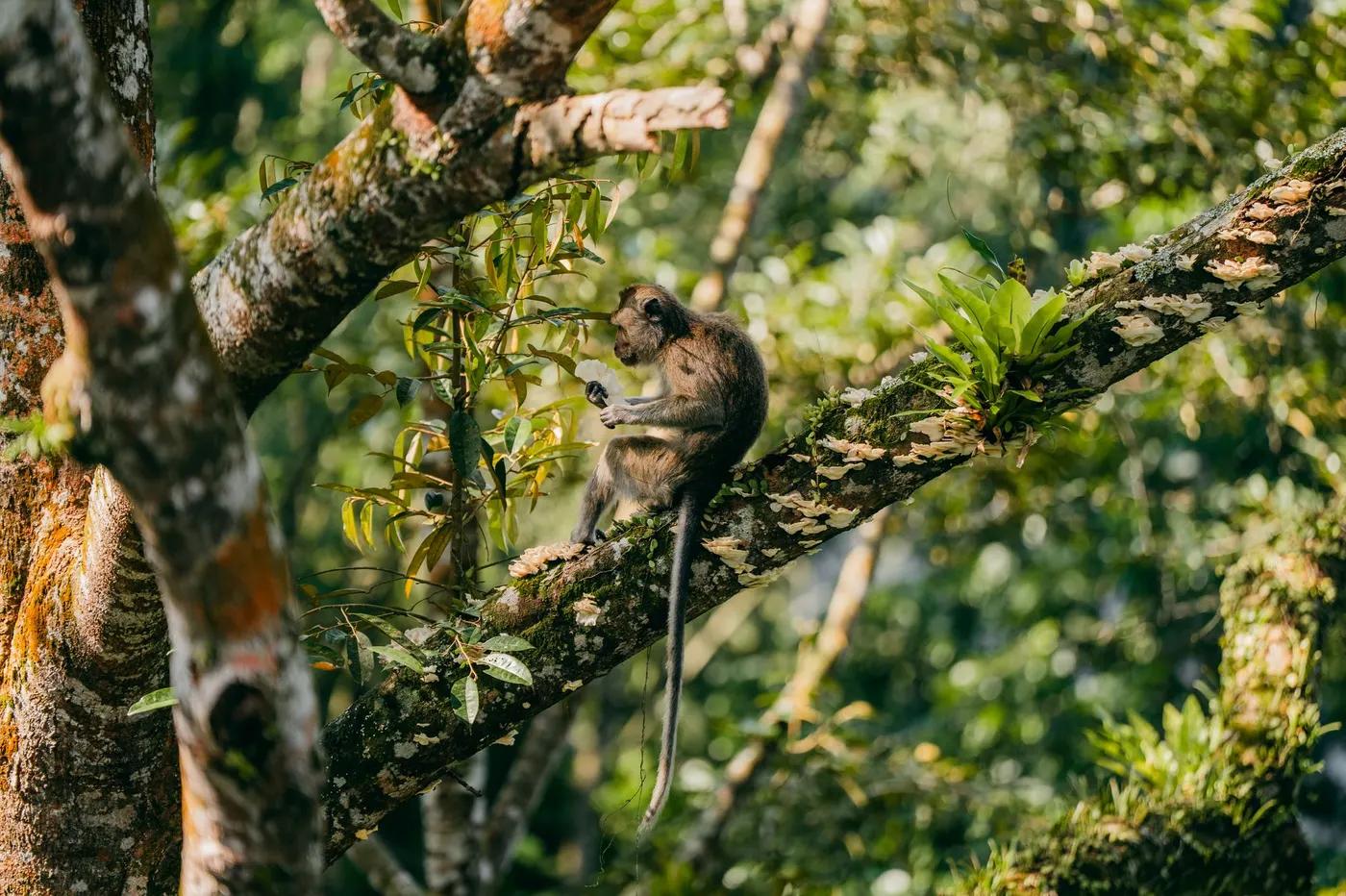
Species / spectacle: Wild proboscis monkeys, long-tailed macaques, silvered langurs, bearded pigs, monitor lizards and varied birdlife across seven vegetation types. Nocturnal species on night walks.
How you see it: boat/trek
Typical duration: Day trip to overnight; most visitors spend 4-8 hours walking trails, some stay one or more nights for dawn and dusk wildlife.
When to go
Open year-round; drier months give easier trails and calmer boat crossings. Proboscis monkeys resident throughout the year.
Proboscis monkeys seen most days year-round, especially around HQ and Telok Assam; reliability high in cooler hours. (Confirm.)
Best time of day: Early morning (about 07:00-09:00) and late afternoon (about 16:00-18:00) when monkeys are most active and temperatures cooler.
Bearded pigs and macaques frequent HQ; migratory birds seasonally; bioluminescent and nocturnal wildlife on night walks.
Sightings are seasonal probabilities, not promises - even in peak season nature does its own thing.
Who it suits
Difficulty (1-5): 3 (moderate)
Physical demand: Sixteen colour-coded trails ranging from short flat boardwalks to steep multi-hour treks over roots and rock. Heat and humidity add strain on longer routes.
Accessibility & group fit: Boardwalks near HQ suit families and casual walkers; longer trails need reasonable fitness. Boat step-on and beach landing limit wheelchair access.
Options for a mixed group: Groups can pick trails by difficulty and regroup at HQ; guided and self-guided options both available. Shared boats hold about five to six passengers.
Permits & responsible travel
Regulation / permits / fees: Park entry around RM20 for foreign adults and RM10 for Malaysians (children reduced); boat transfer roughly RM47 one way per boat. Professional filming needs a permit. Fees volatile (Confirm.).
Guide / crew: Guides optional for day walks but recommended for wildlife spotting and night walks; licensed boatmen run the transfers. Book night walks at HQ.
Do not feed or approach monkeys; secure food and belongings from macaques. Stay on marked trails and carry out rubbish.
Permits, fees and quotas change - confirm before booking.
Safety & hazards
Aggressive macaques around food, tidal boat landings, slippery cliffs and heat exhaustion risk. Never leave food unattended.
Weather / conditions: Tide dictates boat timing and last departures; rough seas and rain during the wet season can cancel crossings. Slippery trails after rain.
Park rangers coordinate response; serious cases evacuated by boat to Kuching hospitals. Tides can delay evacuation. (Confirm.)
Getting there & staying
Access logistics: Drive or bus from Kuching to Kampung Bako jetty, then a 20-30 minute boat to the park; no road access to the park itself. Last return boats tide-dependent. (Confirm.)
Accommodation / camping: Park-run hostel and forest lodges plus a canteen at Telok Assam; limited camping. Book park accommodation in advance.
Gear / water / connectivity: Bring water, sun protection, insect repellent, rain gear and dry-bag for the boat; connectivity is patchy. Carry cash for fees.
Facilities: HQ has registration, canteen, toilets, interpretive centre and marked trailheads; basic overnight facilities. Boat jetty at HQ.
Crowds / solitude: HQ and popular short trails busy midday, especially day-trippers; longer trails and overnights offer solitude. Early boats beat the crowds.
Operators & guiding
Nearby operators / hubs: Kuching is the hub; Bako boat transfer services and operators such as Borneo Adventure serve the park. (Confirm.)
Guided trips / outfitters: Kuching-based tour operators run Bako day and overnight trips; boat ticketing services handle transfers. Verify current schedules.
Operators change - confirm current licensing before you book.
Live conditions & sources
Recent sightings and today's conditions are a runtime layer - check the sources: Sarawak Tourism Board park page; Sarawak Forestry-managed park; Bako boat ticketing info; supporting guides. Primary-source-based.
This profile is desk research, compiled from public sources - not a first-hand wildlife report. Coordinates are approximate.