

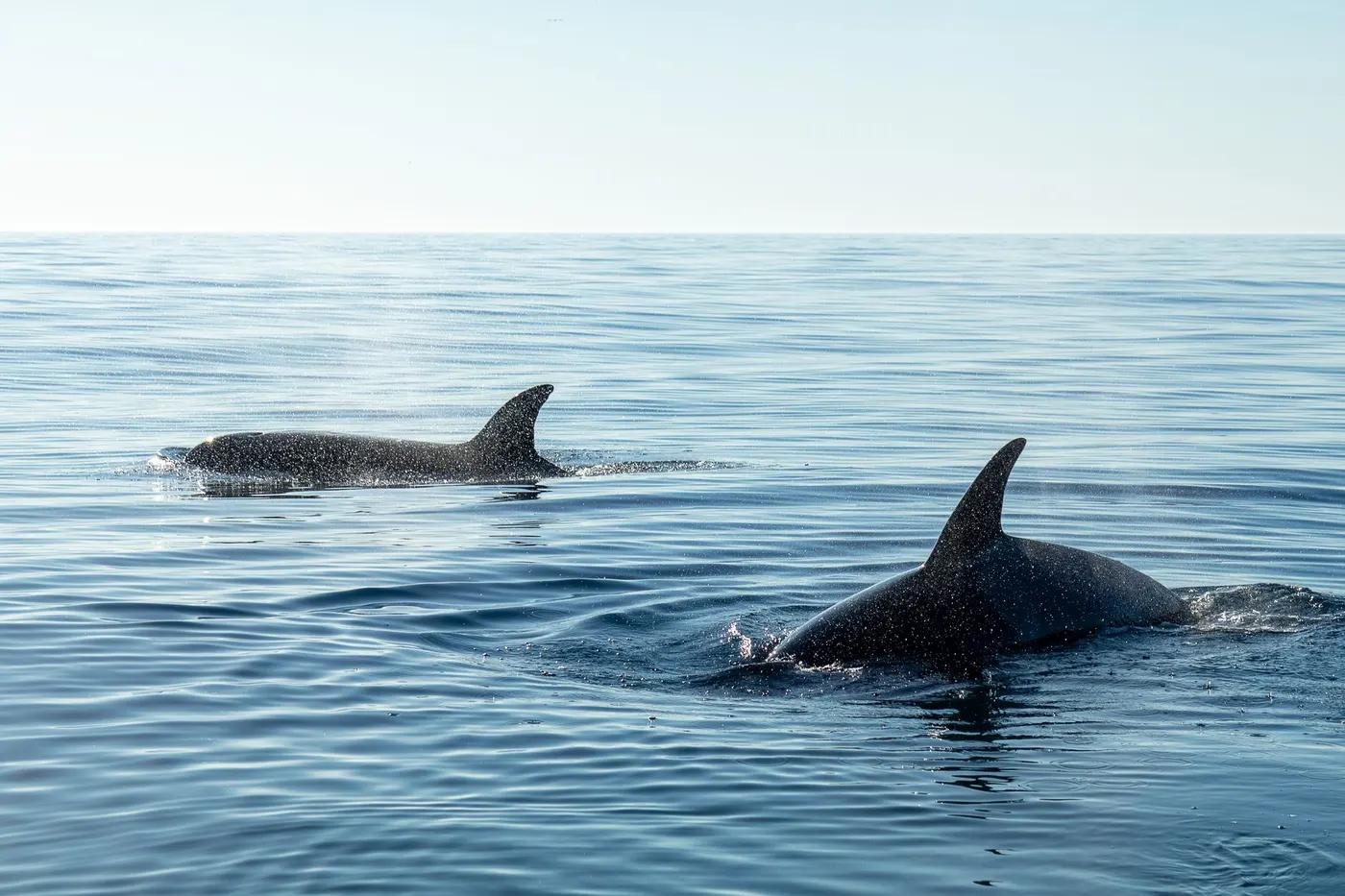
Bohol Sea Dolphin and Whale Watching
Also known as: Pamilacan Island Cetaceans
Former whaling village runs dawn boat trips across a cetacean-rich strait
The encounter
Species / spectacle: Multiple dolphin species (spinner, bottlenose, others) year-round, plus seasonal larger cetaceans such as Bryde's and sperm whales. The waters host at least a dozen recorded cetacean species.
How you see it: boat
Typical duration: Full-day outing; the whale and dolphin search runs several hours from dawn, with boat crossings of roughly 45 minutes to an hour each way.
When to go
Roughly March to June before the rainy season for calmest seas and best whale odds. Dolphins are seen much of the year.
Dolphins fairly reliable in the calm dry months March-June; whales more sporadic and best March-June (Confirm.). Sightings drop as monsoon swell rises mid-year.
Best time of day: Depart at dawn when the sea is glassy and cetaceans are easiest to see. Trips typically wrap by late morning as wind and glare build.
Larger whale species (Bryde's and sperm whales) are most likely around March through June. Whale shark passages are occasionally reported in early-year months (Confirm.).
Sightings are seasonal probabilities, not promises - even in peak season nature does its own thing.
Who it suits
Difficulty (1-5): 2 (moderate)
Physical demand: Mostly seated on an outrigger boat for hours; open-sea swell and a loud engine can cause seasickness and fatigue. Optional snorkeling adds light swimming.
Accessibility & group fit: Suitable for general travellers and families comfortable on small boats; not ideal for those prone to severe seasickness. Early pre-dawn start required.
Options for a mixed group: Small groups per outrigger boat with a dedicated spotter; larger parties split across multiple bancas.
Permits & responsible travel
Regulation / permits / fees: Community-based ecotourism developed under DOT, DENR and WWF as a national ecotourism pilot; dolphin and whale hunting is banned under national fisheries orders. Feeding and touching cetaceans are prohibited and boats keep respectful distance; package prices vary by operator and inclusions (Confirm.).
Guide / crew: Experienced Pamilacan boat crew and spotters are essential and included; snorkeling in the coral garden also requires a guide.
Booking the Pamilacan community operators directly supports ex-whalers who transitioned to conservation-based livelihoods. Do not request feeding, chasing or swimming with cetaceans; keep noise down and let boats maintain distance.
Permits, fees and quotas change - confirm before booking.
Safety & hazards
Open-sea conditions, engine noise and seasickness; strong sun. Sightings are never guaranteed as animals are wild.
Weather / conditions: Open-sea crossing exposed to wind, swell and sudden squalls; trips are cancelled or bumpy in rough weather. Sun exposure and seasickness are the main comfort risks.
Limited on-water rescue capacity; nearest hospitals are on the Bohol mainland (Tagbilaran). Confirm life vests and safety gear with the operator before departure.
Getting there & staying
Access logistics: Land transfer to Baclayon or a Tagbilaran or Panglao pickup, then an outrigger boat crossing of about 45-60 minutes to the search grounds and island. Pre-dawn departure.
Accommodation / camping: Simple homestays and a basic guesthouse exist on Pamilacan Island for overnighters; most visitors day-trip from Bohol mainland resorts.
Gear / water / connectivity: Bring sun protection, water, motion-sickness remedy and a dry bag; snorkel gear is usually provided. Connectivity on the island and open sea is limited.
Facilities: Basic island facilities, beach, and simple eateries; limited infrastructure. Boats are outrigger bancas.
Crowds / solitude: Generally low-key and uncrowded compared with mainstream Bohol attractions. Multiple boats may converge on a pod, so choose responsible crews.
Operators & guiding
Nearby operators / hubs: Hubs at Baclayon, Tagbilaran and Panglao; often combined with Balicasag Island and Bohol countryside itineraries.
Guided trips / outfitters: Pamilacan Island Dolphin and Whale Watching Tours (whales.bohol.ph); Baclayon LGU-linked community tours; assorted Tagbilaran and Panglao agencies.
Operators change - confirm current licensing before you book.
Live conditions & sources
Recent sightings and today's conditions are a runtime layer - check the sources: whales.bohol.ph; Baclayon LGU (baclayon.bohol.gov.ph); BFAR fisheries orders; DOT/DENR/WWF ecotourism history. Secondary tour listings for pricing.
This profile is desk research, compiled from public sources - not a first-hand wildlife report. Coordinates are approximate.