
Mary Island
Also known as: Mborokua
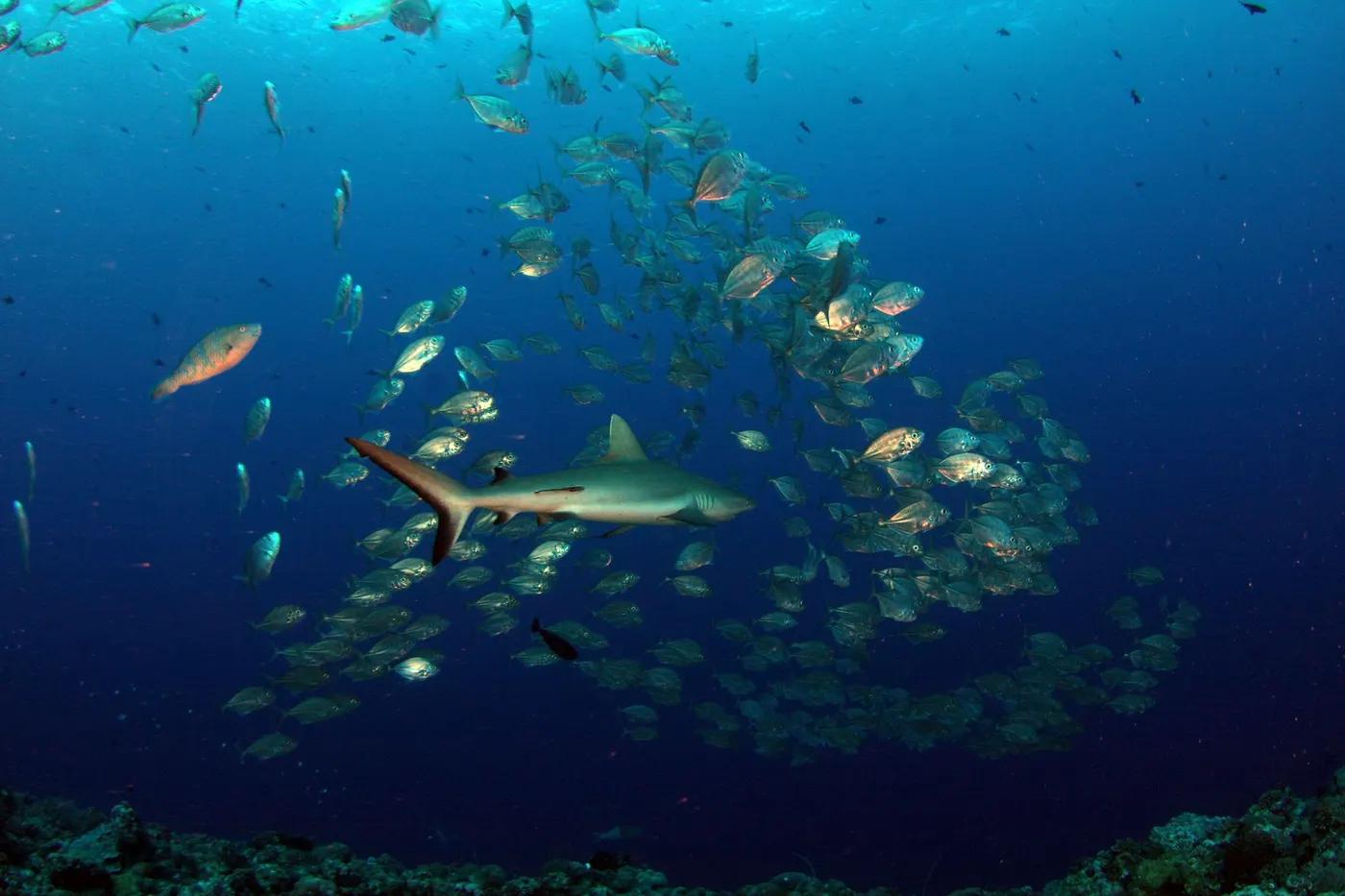
Extinct-volcano seamount famed for tornado schools of barracuda and jacks
The encounter
Species / spectacle: Massive schools of barracuda and jacks, bumphead parrotfish, grey and whitetip reef sharks, with occasional mantas and mobula rays.
How you see it: dive
Typical duration: Standard 40-60 min dive per site, usually run as multiple dives across a liveaboard day-stop. (Confirm.)
When to go
Diveable much of the year on liveaboard itineraries; calmer conditions generally favour the drier months. (Confirm.)
Schooling barracuda and jacks are reported reliably across the season though aggregations vary; no month-by-month index published. (Confirm.)
Best time of day: Dived to suit tide and current windows set by the liveaboard crew rather than a fixed hour. (Confirm.)
Occasional manta and mobula ray encounters add to the resident schooling and shark action. (Confirm.)
Sightings are seasonal probabilities, not promises - even in peak season nature does its own thing.
Who it suits
Difficulty (1-5): 4 (high)
Physical demand: Exposed open-water site with potential for strong current and swell, so good buoyancy and comfort in blue water are needed. Wall dives can pull divers deep quickly.
Accessibility & group fit: Reached only by liveaboard, so best for experienced certified divers rather than casual snorkellers. Not a shore or day-boat destination.
Options for a mixed group: Liveaboards typically split guests across tenders and dive guides, allowing separate groups by experience level. (Confirm.)
Permits & responsible travel
Regulation / permits / fees: Custom or reef fees to local reef owners are typically arranged and paid by the liveaboard; independent access requires landowner permission. (Confirm.)
Guide / crew: Guided liveaboard diving with experienced local crew is the norm and effectively required given the remoteness.
Reefs and surrounding waters fall under Solomon Islands customary tenure, so respect reef-owner permissions and take-nothing dive practice. No collecting of live or dead marine life.
Permits, fees and quotas change - confirm before booking.
Safety & hazards
Strong currents, depth on the walls and open-ocean exposure are the main hazards. Pelagic conditions demand conservative dive planning.
Weather / conditions: Open, exposed location means wind, swell and current can build with little shelter. Trips may be re-routed in rough weather.
Remote open-water location far from medical help, so the liveaboard carries oxygen and evacuation depends on returning toward Honiara. (Confirm.)
Getting there & staying
Access logistics: All Solomon Islands liveaboards depart Honiara on Guadalcanal; Mborokua is a multi-hour open-water crossing reached mid-itinerary between the Russells and Marovo.
Accommodation / camping: No accommodation on the uninhabited island; guests stay aboard the liveaboard vessel.
Gear / water / connectivity: Full scuba gear and fills provided by the liveaboard; connectivity is effectively nil at the remote offshore site. (Confirm.)
Facilities: No land facilities on the uninhabited island; all services are onboard the vessel.
Crowds / solitude: Very low traffic and often no other vessels present; a solitude-heavy remote dive.
Operators & guiding
Nearby operators / hubs: Honiara is the departure hub; Solomon Islands liveaboards such as Bilikiki and Taka-style operators visit Mborokua. (Confirm.)
Guided trips / outfitters: Bilikiki Cruises and other Honiara-based liveaboards list Mary Island as a scheduled dive stop. (Confirm.)
Operators change - confirm current licensing before you book.
Live conditions & sources
Recent sightings and today's conditions are a runtime layer - check the sources: https://www.bilikiki.com/extras/mary-island ; https://en.wikipedia.org/wiki/Mborokua ; https://www.liveaboard.com/diving/solomon-islands/mary-island - referenced under fair use.
This profile is desk research, compiled from public sources - not a first-hand wildlife report. Coordinates are approximate.