

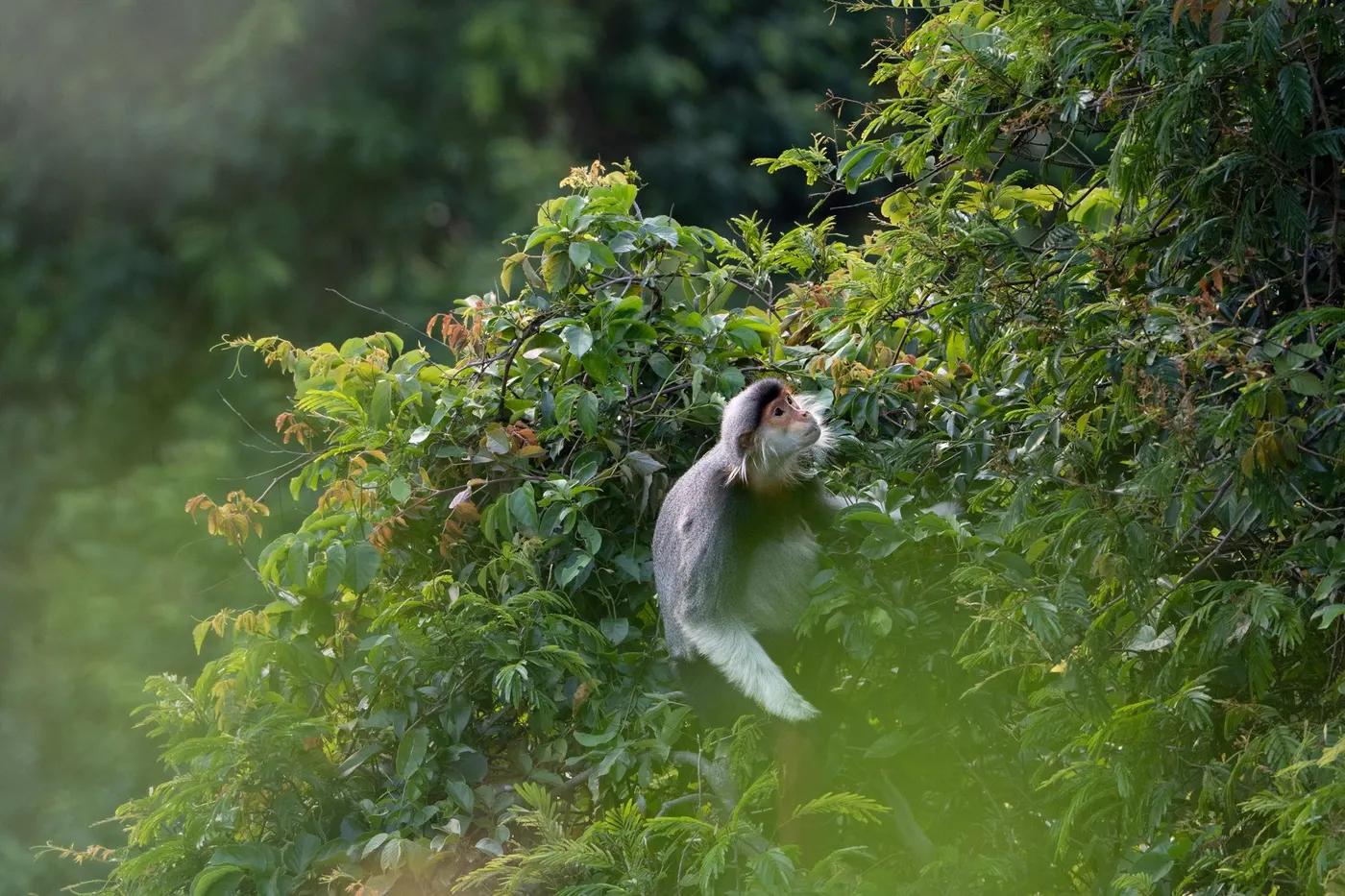
Cat Ba Langur
Also known as: Golden-headed langur
Karst refuge of one of the world's rarest primates, best from Lan Ha Bay boats
The encounter
Species / spectacle: Cat Ba langur (Trachypithecus poliocephalus), a golden-headed langur endemic to the island. The whole population is very small, so this is a rare species, not a guaranteed sighting.
How you see it: boat/trek
Typical duration: Usually part of a half or full-day boat, kayak or trek excursion around Lan Ha Bay and Cat Ba National Park. Langur viewing is opportunistic within that.
When to go
Drier, calmer months give better boat conditions and comfort. Storm periods reduce access on the bay.
Sightings are low and never guaranteed given the tiny population (Confirm.). A knowledgeable guide and calm conditions improve odds slightly.
Best time of day: Early morning and late afternoon when langurs move on the cliffs. Calm light and water aid spotting.
No reliable seasonal langur event given the small population. Calm-season bay conditions are the main practical variable.
Sightings are seasonal probabilities, not promises - even in peak season nature does its own thing.
Who it suits
Difficulty (1-5): 3 (moderate)
Physical demand: May involve boat travel, kayaking or steep karst trails, depending on the route. Sightings often require patience and scanning distant cliffs.
Accessibility & group fit: Boat-based viewing suits many visitors, but land approaches to sanctuary areas can be strenuous on karst. Best for groups comfortable on water and uneven ground.
Options for a mixed group: Boat and kayak tours run in small to medium groups. Splits depend on the operator and access limits to sensitive langur areas (Confirm.).
Permits & responsible travel
Regulation / permits / fees: Cat Ba National Park entry and any sanctuary access rules apply, with core langur areas protected from disturbance. Fees vary by route and operator (Confirm.).
Guide / crew: Strongly recommended. Local boat and park guides know likely cliff areas and enforce safe distances.
Keep well clear of langur groups and never approach or feed them; the population is critically endangered and highly sensitive. Support the Cat Ba Langur Conservation Project ethos of strict protection.
Permits, fees and quotas change - confirm before booking.
Safety & hazards
Water conditions, slippery karst, sun and heat. Distant cliff viewing demands patience and good optics.
Weather / conditions: Storms, fog and rough water on Lan Ha Bay can cancel trips and hide cliffs. Karst trails are slippery when wet (Confirm.).
Response depends on boat access back to Cat Ba town and Haiphong hospitals. Remote bay locations slow evacuation (Confirm.).
Getting there & staying
Access logistics: Reach Cat Ba Island via Haiphong by ferry or bus-boat combinations, then join boat, kayak or trekking tours from Cat Ba town. Sanctuary areas lie around the national park and bay.
Accommodation / camping: Cat Ba town has a wide range of hotels; some bay boats offer overnight stays. Camping is restricted in protected zones.
Gear / water / connectivity: Bring binoculars, sun and rain protection, water and secure dry-bags for boat trips. Connectivity is patchy out on the bay (Confirm.).
Facilities: Full services in Cat Ba town and at the national park centre. Limited facilities on remote bay routes.
Crowds / solitude: Lan Ha Bay tourism is busy, but dedicated langur areas are protected and quieter. Peak season crowds the popular routes.
Operators & guiding
Nearby operators / hubs: Cat Ba National Park, Cat Ba Langur Conservation Project and Cat Ba town boat and kayak operators. Cat Ba is the hub.
Guided trips / outfitters: Cat Ba town boat, kayak and trekking operators plus national park guided routes into Lan Ha Bay.
Operators change - confirm current licensing before you book.
Live conditions & sources
Recent sightings and today's conditions are a runtime layer - check the sources: Cat Ba Langur Conservation Project and Endangered Primate Rescue Center reference. https://www.eprc.asia/cat-ba-langur/
This profile is desk research, compiled from public sources - not a first-hand wildlife report. Coordinates are approximate.